


 Let Us Call You


Parkinson’s Disease is a progressive neurological disorder that primarily affects the motor system by depleting dopamine-producing neurons in a specific region of the brain called the substantia nigra.
As these nerve cells break down or die, the brain’s ability to coordinate smooth, purposeful muscle movements diminishes, leading to the hallmark tremors and stiffness associated with the condition. While it is widely known for its impact on physical mobility, the disease also involves a variety of non-motor symptoms that can affect mood, sleep, and cognitive functions.
What is Parkinson's Disease?
The parkinson's disease meaning involves a chronic decline of the central nervous system that results in both motor and non-motor complications. It is categorized as a movement disorder because it forces the body into involuntary actions or restrictive rigidity.
It is important to distinguish between Parkinson's disease and parkinsonism, as the latter is an umbrella term used to describe a group of conditions that share similar symptoms, such as tremors and slow movement, though they may have different underlying causes.
Parkinson's Disease Cause
A definitive parkinson's disease cause remains the subject of intense research, generally believed to stem from a complex interaction between genetics and environment.
- Genetic Mutations: Specific gene variations can increase risk, though most cases are sporadic.
- Environmental Triggers: Exposure to certain toxins, herbicides, or pesticides.
- Lewy Bodies: The presence of abnormal protein clumps (alpha-synuclein) in brain cells.
- Dopamine Loss: Death of neurons in the substantia nigra that produce chemical messengers.
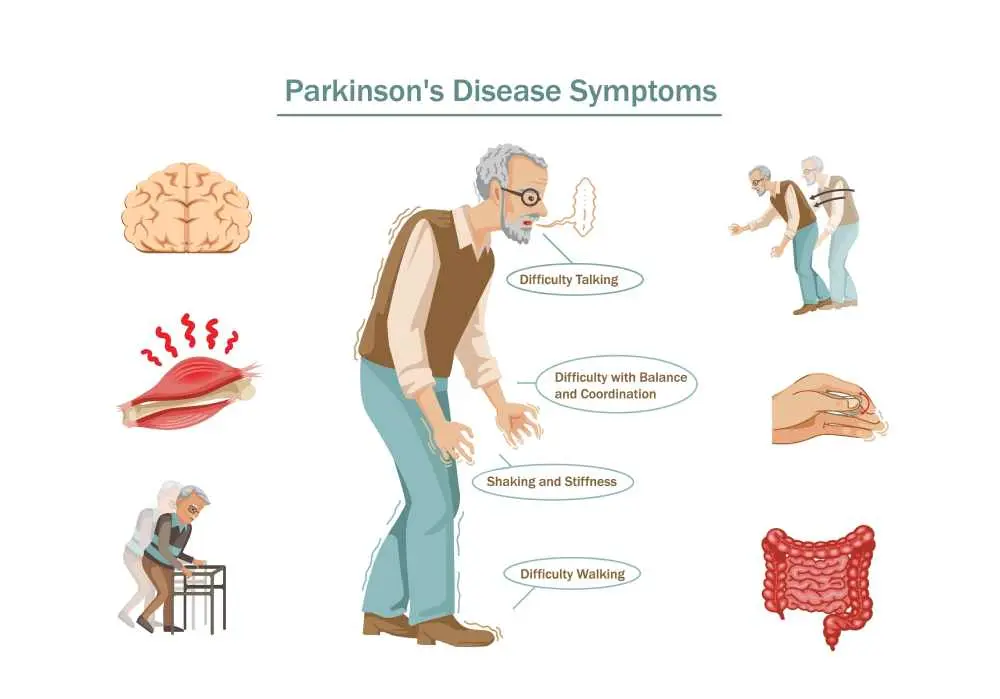
Parkinson's Disease Symptoms
Typical parkinson's disease symptoms usually begin on one side of the body and gradually progress to both sides. Key symptoms include:
- Bradykinesia: Slowed physical movement, making simple tasks like buttoning a shirt difficult.
- Muscle Stiffness: Rigidity that can occur in any part of the body, limiting range of motion.
- Postural Instability: Problems with balance and coordination that may lead to falls.
- Impaired Automatic Movements: A decreased ability to perform unconscious movements like blinking or smiling.
Signs Of Parkinson's Disease
Recognizing parkinson's disease early symptoms is crucial for early intervention. Look for these specific indicators:
- Resting Tremor: A slight shaking or trembling in a finger, hand, or chin when the body is at rest.
- Micrographia: A change in handwriting where letters become noticeably smaller and crowded.
- Masked Face: Facial expressions become less animated or appear "fixed."
- Reduced Arm Swing: One or both arms no longer swing naturally while walking.
- Anosmia: A sudden or gradual loss of the sense of smell.
Parkinson's Disease Stages
The progression of the condition is measured through the five parkinson's disease stages of the Hoehn and Yahr scale:
- Stage 1: Mild symptoms (tremors or stiffness) affecting only one side of the body.
- Stage 2: Symptoms affect both sides; posture and gait may begin to change.
- Stage 3: Significant slowing of movements and impaired balance; however, the person is still independent.
- Stage 4: Severe disability; the person may stand without help but requires a walker for movement.
- Stage 5: Advanced stage; the patient is often bedridden or requires a wheelchair and 24/7 nursing care.
Diagnosis Of Parkinson's Disease
The Parkinson's disease first symptoms are often the primary basis for a diagnosis, as there is no specific blood test or imaging scan that can definitively confirm the condition. Instead, a neurologist will perform a detailed physical and neurological exam, looking for the presence of two out of three cardinal signs: tremor, rigidity, and bradykinesia. In some cases, a DaTscan may be ordered to visualize the dopamine system in the brain, or a trial of dopamine-regulating medication may be used to see if the patient’s symptoms improve.
Herniated disc diagnosis
While unrelated to neurology, the parkınson's dısease ıcd 10 code (G20) is essential for clinical documentation to ensure that movement disorders are not confused with orthopedic issues during a systemic evaluation. It is important for clinicians to differentiate between nerve compression in the spine and the central nervous system decline seen in Parkinson’s. Proper coding and diagnostic clarity allow for the correct path of specialized care, whether the issue is spinal or neurological in nature.
Parkinson's Disease Treatments
A comprehensive parkinson's disease treatment plan focuses on managing symptoms through a combination of medication, lifestyle changes, and sometimes surgical intervention. Levadopa-carbidopa remains the most effective pharmacological therapy, working by replenishing dopamine levels in the brain to improve mobility. Physical therapy is also highly recommended to maintain balance and flexibility, while Deep Brain Stimulation (DBS) surgery may be considered for patients who no longer respond predictably to medication.
Frequently Asked Questions About Parkinson's Disease
What is the life expectancy of a person with Parkinson's disease?
People with Parkinson's typically have a near-normal life expectancy, as the disease itself is not fatal, though complications such as falls or pneumonia can pose serious health risks.
What causes Parkinson's disease?
The condition is caused by the loss of nerve cells in the brain that produce dopamine, likely triggered by a combination of genetic factors and environmental exposures.
Can you still live a normal life with Parkinson's?
Many individuals continue to live active and fulfilling lives for many years after diagnosis by strictly adhering to their treatment plans and maintaining a healthy lifestyle.
What are the 5 early signs of Parkinson's disease?
The most common early indicators include resting tremors, smaller handwriting, loss of smell, trouble sleeping, and a stooped posture or stiffness.
Which medical department should be consulted for Parkinson’s Disease?
Patients should seek a consultation with the Neurology department, specifically a specialist known as a movement disorder neurologist.


