


 Let Us Call You


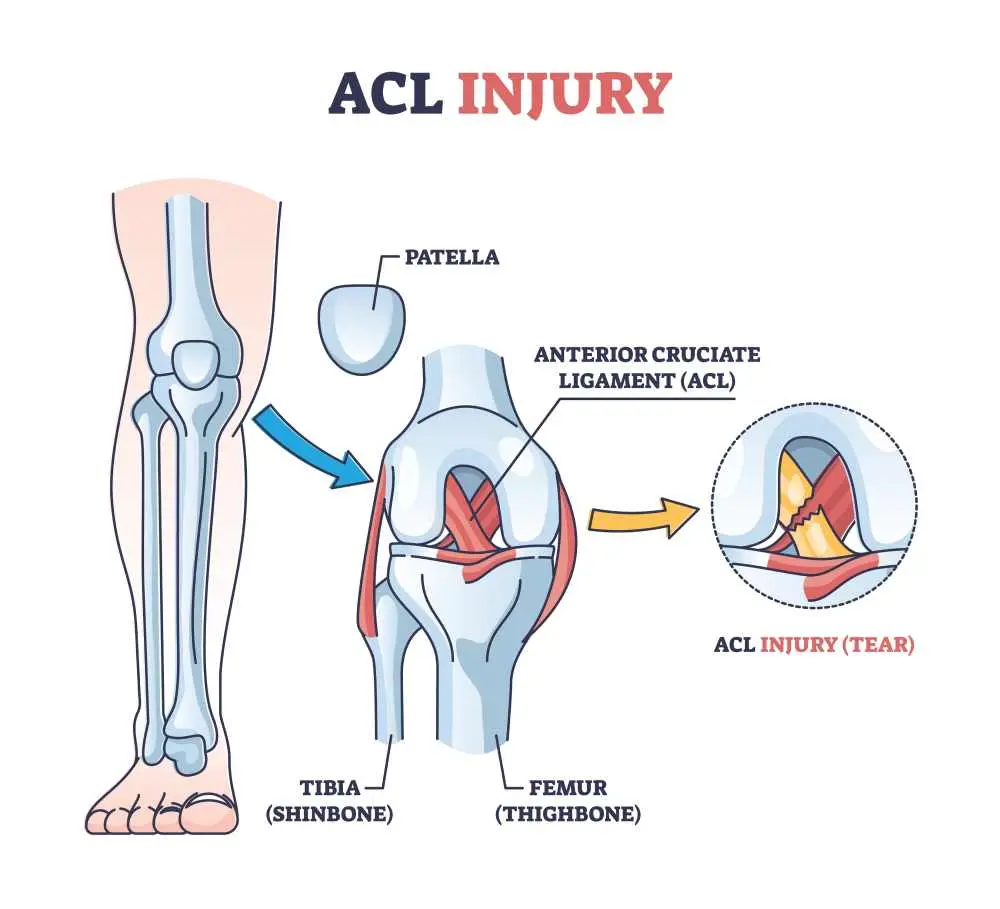
An ACL injury is a significant sprain or tear of the anterior cruciate ligament, which is one of the primary bands of tissue connecting your thigh bone to your shinbone. This injury is most common during sports that involve sudden stops, jumps, or changes in direction—such as basketball, soccer, and football.
Depending on the severity of the damage, the ligament may be partially stretched or completely ruptured, often requiring a combination of medical intervention and rehabilitation to restore stability to the knee joint.
What is ACL Injury?
The acl injury meaning refers to the structural damage of the anterior cruciate ligament, a key stabilizer that prevents the tibia from sliding out in front of the femur. While the knee contains several ligaments, the ACL is critical for rotational stability, making it essential for athletes and active individuals. When this ligament is compromised, the knee loses its ability to support pivoting movements, which can lead to further joint degradation if left untreated.
ACL Injury Causes
Identifying specific acl injury causes usually involves analyzing high-impact movements or sudden mechanical shifts in the lower body. Most injuries occur through non-contact mechanisms, where the force of the body's own motion exceeds the ligament's strength.
The most common causes include:
- Changing direction rapidly while the foot is firmly planted on the ground.
- Landing from a jump in a way that forces the knee to collapse inward or hyperextend.
- Stopping suddenly while running at high speeds, putting immense shear force on the ligament.
- Receiving a heavy blow to the side of the knee (common in football or rugby) that pushes the joint out of alignment.
- Forcefully straightening the knee beyond its natural limit.
ACL Injury Symptoms
Common acl injury symptoms often begin with a loud pop or a popping sensation felt deep within the knee joint at the moment of impact. Following the initial trauma, individuals typically experience:
- Rapid Swelling: The knee often swells significantly within the first few hours due to internal bleeding.
- Severe Pain: Intense pain acl injury sufferers feel usually makes it impossible to continue physical activity.
- Loss of Range of Motion: Difficulty straightening or fully bending the leg.
- Tenderness: Sensitivity along the joint line when pressure is applied.
Signs Of ACL Injury
Physical signs of acl injury are most evident when the patient attempts to put weight on the affected leg, often resulting in the knee "giving out." Healthcare providers look for specific indicators such as joint laxity and a visible change in the alignment of the knee. Unlike the internal sensations reported by the patient, these signs are observable markers that suggest the stabilizing fibers of the Anterior Cruciate Ligament are no longer functional.
- Instability: A persistent feeling that the knee is loose or buckling.
- Difficulty Walking: A noticeable limp or total inability to bear weight.
- Bruising: Discoloration around the knee joint appearing shortly after the incident.
ACL Injury Diagnostic Methods
A clinical acl injury test is the first step in diagnosis, involving physical maneuvers that stress the ligament to check for excessive movement. While manual exams are highly effective, doctors also utilize imaging to confirm the grade of the tear. In clinical documentation, the acl injury icd 10 code (such as S83.51) is used to categorize the specific nature of the sprain for medical records and insurance purposes.
ACL Injury Treatment
The primary goal of acl injury treatment is to restore stability to the knee and return the patient to their previous level of function. For sedentary individuals or those with partial tears, conservative management through bracing and physical therapy may be sufficient. This non-surgical acl injury recovery path focuses on strengthening the quadriceps and hamstrings to compensate for the ligament's reduced stabilizing capacity.
ACL Injury Surgery
When conservative methods are insufficient, acl injury surgery is performed to reconstruct the ligament using a graft from the patient's own tissue or a donor. Because a torn ACL cannot be simply sewn back together, the surgeon creates a new ligament to take its place. Following the procedure, the acl injury recovery time varies, but most patients require several months of intensive rehabilitation to regain full strength. The total acl injury length of recovery for a return to competitive sports typically spans between nine and twelve months.
Frequently Asked Questions About ACL
How do you assess an acl injury?
A medical professional assesses the injury by reviewing the mechanism of trauma, checking for swelling, and performing manual stability tests to see if the shinbone moves too far forward.
What is the physical exam for the ACL?
The physical exam involves the doctor moving the knee joint in specific directions while the patient is relaxed to determine the degree of ligament laxity and joint instability.
What are the three tests for the ACL?
The three most common diagnostic maneuvers used by clinicians are the Lachman test, the Anterior Drawer test, and the Pivot Shift test.
What is the gold standard test for ACL?
The Lachman test is widely considered the gold standard clinical exam due to its high sensitivity and accuracy in detecting a ruptured ligament.
Which medical department should be consulted for ACL Injury?
You should consult the Orthopedics or Sports Medicine department, as these specialists focus on musculoskeletal injuries and surgical ligament reconstruction.


