


 Let Us Call You


Vitiligo is a chronically progressive dermatological condition characterized by pigment loss in the skin. It occurs as a result of damage to the cells responsible for melanin production. In addition to altering aesthetic appearance, it may also affect the individual psychologically and socially. Vitiligo, which can occur at any age, is a condition that may show progression. With early diagnosis, the progression of the disease can be brought under control and a noticeable improvement in skin appearance can be achieved.
What is Vitiligo?
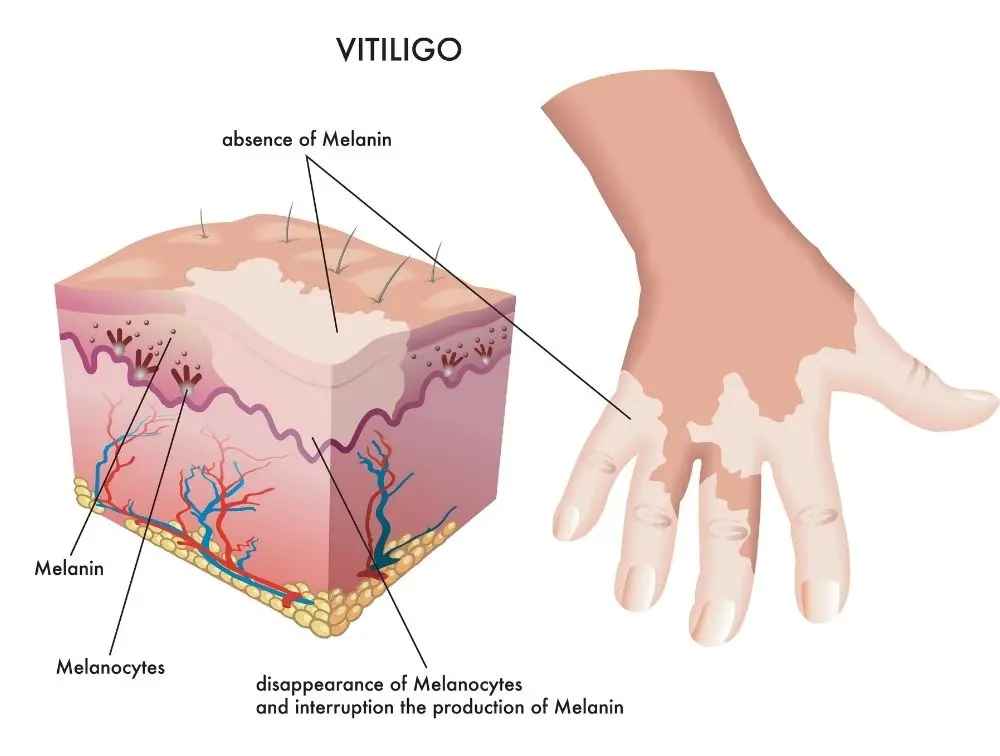
Vitiligo is a depigmentation disorder that develops as a result of the loss of pigment cells called melanocytes. It manifests as white patches on the skin with clearly defined borders due to a decrease or complete cessation of melanin production in the body. These patches may enlarge over time or spread to different areas. Although the exact cause of the disease is not fully known, the strongest theory involves an autoimmune mechanism. Vitiligo is not contagious and is not associated with cancer.
At Medicana International’s Department of Dermatology, a safe and scientific approach is adopted by offering diagnostic and treatment options in line with international patient standards.
Symptoms of Vitiligo
Vitiligo symptoms appear as distinct white patches, and the manifestations may vary from patient to patient. The course of the disease can be unpredictable; in some individuals it progresses slowly, while in others it may spread rapidly.
Vitiligo symptoms can be listed as follows:
Loss of skin color
White or light-colored patches develop on the skin, usually surrounded by well-defined borders. Over time, these patches may enlarge or merge, affecting wider areas. They are most commonly seen on the face, hands, elbows, knees, and genital area.
Changes in hair color
Vitiligo is a condition that affects not only the skin but also the hair follicles. Premature whitening may be observed in the hair, eyebrows, eyelashes, or beard, and hair in the affected areas may lose its pigment.
Involvement of the oral cavity, lips, and nasal mucosa
Pigment loss may occur inside the mouth, on the lips, and in the nasal mucosa. The color change in these areas is generally painless but requires dermatological evaluation when noticed.
Sensitivity to sunlight
Areas with pigment loss are more vulnerable to sunlight. The risk of sunburn increases in these regions, and prolonged UV exposure may negatively affect skin health. Therefore, regular use of sunscreen is of great importance.
What Causes Vitiligo?
Although the exact cause of vitiligo is unknown, it is believed that multiple factors play a role together.
Autoimmune mechanism
The immune system may target melanocytes as if they were foreign cells. This leads to a decrease or complete cessation of pigment production and results in depigmentation of the skin.
Genetic predisposition
The risk of vitiligo may increase in individuals with a family history of the condition. However, the disease cannot be explained solely by genetic factors, and environmental influences may also contribute to the process.
Environmental and physical triggers
Severe sunburn, skin trauma, or intense stress may trigger the onset of vitiligo. In some cases, these factors may accelerate the spread of existing lesions.
Vitiligo may also occur together with thyroid diseases and certain autoimmune conditions; therefore, a comprehensive medical evaluation is recommended.
How is Vitiligo Diagnosed?
Vitiligo is usually diagnosed through a clinical examination performed by an experienced dermatologist. The appearance and distribution of the lesions are often sufficient for diagnosis; however, additional tests may be required in some cases.
The methods used in the diagnosis of vitiligo include:
- Detailed evaluation of pigment loss with a Wood’s lamp
- Blood tests to investigate accompanying autoimmune diseases
- Rarely, a skin biopsy
- Early and accurate diagnosis is an important factor that directly affects treatment success.
How is Vitiligo Treated?
Although there is no definitive cure for vitiligo, many effective treatment options are currently available. The aim is to slow pigment loss, achieve repigmentation in possible areas, and improve the patient’s quality of life.
Topical treatments
Corticosteroid creams and immune-modulating agents may help reduce inflammation. These treatments may yield more effective results when initiated in the early stages and are preferred in localized lesions.
Phototherapy (Light Therapy)
This treatment method is one of the most commonly used approaches in vitiligo. With regular application, the reactivation of pigment cells is targeted, and the treatment process may generally last several months.
Surgical methods
In patients with chronic vitiligo, surgical procedures such as melanocyte transplantation may be considered. These methods are usually applied in selected cases and should be performed in experienced centers.
Cosmetic support
Medical camouflage products and dermocosmetic solutions may help improve the appearance of the skin. They may particularly enhance patients’ self-confidence in cases involving facial lesions.
Sun protection
Broad-spectrum sunscreens with SPF 30 and above are recommended. Sun protection reduces the risk of burns and supports overall skin health.
For vitiligo diagnosis or a treatment plan, you may schedule an appointment with our dermatology specialists and discuss your personalized treatment options.
This content is for informational purposes only and is not a substitute for medical advice. If you’re experiencing any of these symptoms, please contact us for professional help.


