


 Let Us Call You


Schizophrenia is a complex mental health disorder that affects how a person thinks, feels, behaves, and perceives reality. It is considered a chronic psychiatric condition that may significantly influence daily life, communication, social relationships, and emotional functioning. Symptoms often begin in late adolescence or early adulthood, although onset may vary between individuals.
Key Takeaways
- Schizophrenia is a chronic psychiatric disorder that affects thinking, perception, emotions, and behavior.
- Symptoms may include hallucinations, delusions, disorganized thinking, and social withdrawal.
- Early diagnosis and long-term psychiatric support may help improve daily functioning and quality of life.
- Table Of Contents
- What is Schizophrenia?
- What Are the Symptoms of Schizophrenia?
- What Causes Schizophrenia?
- What Are the Risk Factors for Schizophrenia?
- What Are the Complications of Schizophrenia?
- How is Schizophrenia Diagnosed?
- What Are the Treatment Options for Schizophrenia?
- Can Schizophrenia Be Prevented?
- Schizophrenia Treatment in Turkey
What is Schizophrenia?
Schizophrenia is a severe psychiatric disorder characterized by disturbances in thinking, perception, emotions, and behavior. Individuals with schizophrenia may experience difficulty distinguishing between reality and distorted thoughts or perceptions. The condition may affect communication, emotional expression, concentration, and decision-making abilities.
Schizophrenia is associated with a combination of genetic, biological, and environmental factors. Symptoms and severity can vary significantly between individuals, and long-term psychiatric follow-up is often necessary.
Clinical Insight: Research on Schizophrenia and Brain Connectivity
Recent studies suggest that schizophrenia may be associated with disruptions in brain connectivity and communication between different brain regions. Researchers have found that altered neural network activity may contribute to symptoms such as hallucinations, cognitive impairment, and emotional dysregulation. These findings support the understanding of schizophrenia as a complex neuropsychiatric disorder involving both biological and environmental factors.
What Are the Symptoms of Schizophrenia?
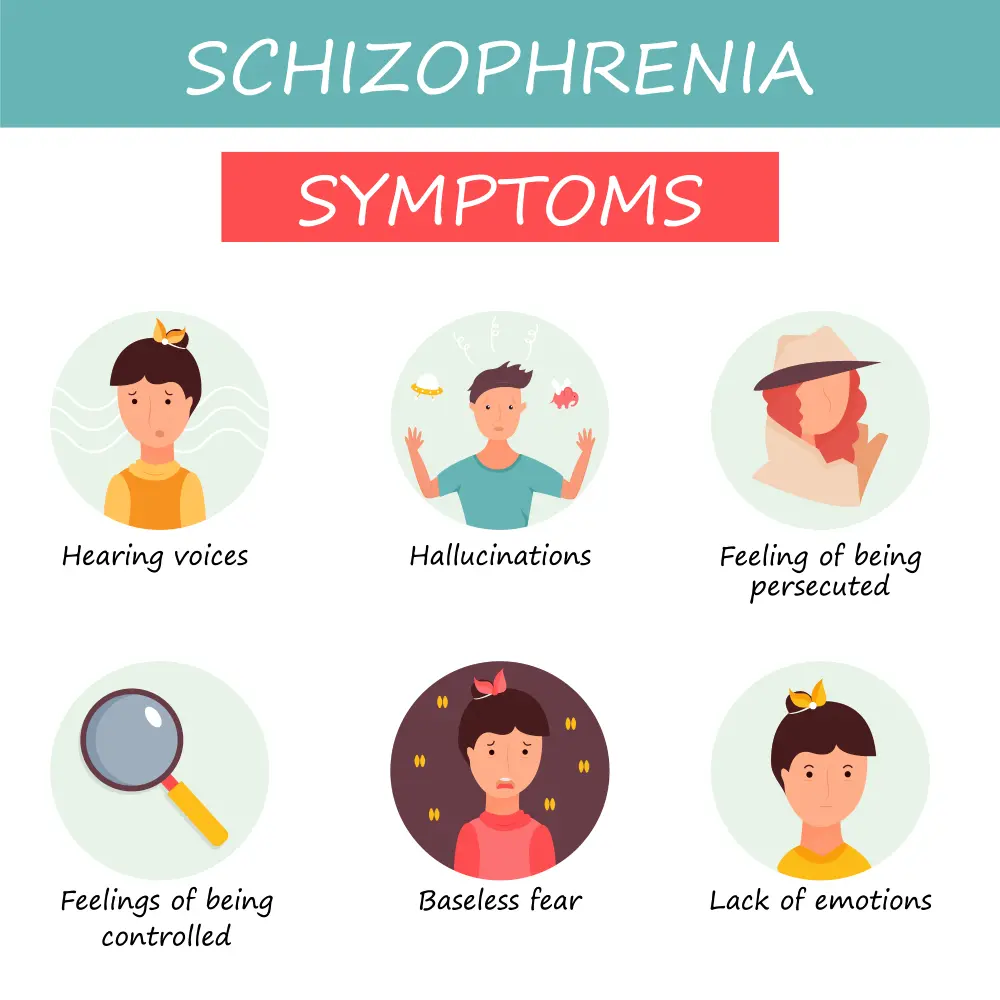
Schizophrenia symptoms are generally categorized as positive symptoms, negative symptoms, and cognitive symptoms. Symptoms may appear gradually or develop more suddenly in some individuals
Common symptoms of schizophrenia include:
- Hallucinations
- Delusions
- Disorganized speech or thinking
- Social withdrawal
- Reduced emotional expression
- Lack of motivation
- Difficulty concentrating
- Cognitive impairment
- Suspicion or paranoia
During psychotic episodes, individuals may experience a loss of contact with reality, which can affect daily functioning and interpersonal relationships.
What Causes Schizophrenia?
The exact cause of schizophrenia is not fully understood, but researchers believe it develops due to multiple contributing factors. Both biological and environmental influences may affect brain function and emotional regulation.
Possible contributing factors include:
- Genetic predisposition
- Brain chemistry and neurotransmitter imbalance
- Prenatal or developmental factors
- Chronic stress exposure
- Environmental triggers
- Substance misuse in vulnerable individuals
In many cases, schizophrenia develops through the interaction of several factors rather than a single cause.
What Are the Risk Factors for Schizophrenia?
Certain factors may increase the likelihood of developing schizophrenia. Having risk factors does not mean that schizophrenia will definitely occur, but it may increase vulnerability.
Risk factors include:
- Family history of schizophrenia
- Exposure to severe stress or trauma
- Substance misuse
- Complications during pregnancy or birth
- Social isolation
- Neurological or developmental factors
Mental health professionals evaluate these factors together with symptoms during psychiatric assessment.
What Are the Complications of Schizophrenia?
Without appropriate treatment and follow-up, schizophrenia may affect multiple aspects of life. Symptoms can interfere with communication, relationships, occupational functioning, and independent living.
Possible complications include:
- Social isolation
- Difficulty maintaining employment or education
- Emotional distress
- Sleep disturbances
- Increased anxiety or depression symptoms
- Substance misuse
Early psychiatric support and ongoing treatment may help reduce long-term complications.

How is Schizophrenia Diagnosed?
Schizophrenia is diagnosed through detailed psychiatric evaluation and clinical assessment. Mental health professionals assess symptoms, behavioral patterns, emotional state, and medical history over time.
Additional neurological or medical evaluations may sometimes be performed to exclude other conditions that can cause similar symptoms. Early diagnosis is important for developing an individualized treatment plan and supporting long-term management.
What Are the Treatment Options for Schizophrenia?
Treatment for schizophrenia is individualized according to symptom severity, patient needs, and long-term mental health goals. Management often combines pharmacological and psychosocial approaches.
Treatment methods may include:
- Antipsychotic medications
- Psychotherapy
- Cognitive behavioral therapy (CBT)
- Family and social support interventions
- Psychiatric follow-up
- Rehabilitation and psychosocial support
Long-term treatment adherence and regular psychiatric monitoring are important parts of symptom management and recovery support.
Can Schizophrenia Be Prevented?
Schizophrenia cannot always be prevented because genetic and biological factors play an important role. However, early recognition of symptoms and avoiding certain risk factors may support mental well-being and earlier intervention.
Ways that may support mental health include:
- Seeking professional support early
- Avoiding substance misuse
- Managing stress effectively
- Maintaining social support systems
- Following regular psychiatric follow-up when needed
Early psychiatric care may help improve treatment outcomes and quality of life.
Schizophrenia Treatment in Turkey
Turkey provides comprehensive mental health and psychiatry services through hospitals and multidisciplinary healthcare centers. Schizophrenia treatment in Turkey may include psychiatric evaluation, medication management, psychotherapy, and long-term follow-up depending on the patient’s clinical condition.
At Medicana International, psychiatry services are provided by specialist physicians experienced in evaluating complex mental health conditions. Treatment planning is individualized according to symptom severity, patient needs, and psychiatric assessment.
Which department should I visit?
Individuals experiencing hallucinations, delusions, severe emotional changes, or difficulty distinguishing reality should consult the Psychiatry department. Early psychiatric evaluation is important for symptom management and long-term mental health support.

