


 Let Us Call You


Bipolar disorder is a chronic mental health condition associated with extreme mood fluctuations that may affect emotions, energy levels, behavior, and daily activities. Individuals with bipolar disorder may experience periods of depression as well as episodes of elevated mood known as mania or hypomania. These mood changes can vary in intensity and duration and may interfere with relationships, work life, sleep quality, and social functioning.
The condition may develop gradually and often requires long-term psychiatric follow-up. With appropriate treatment and emotional support, many individuals with bipolar disorder can manage symptoms and maintain daily functioning.
Key Takeaways
- Bipolar disorder is a mental health condition characterized by significant mood changes, including depressive and manic episodes.
- Symptoms may affect energy levels, behavior, sleep patterns, emotions, and daily functioning.
- Early diagnosis and individualized psychiatric treatment may help improve emotional stability and quality of life.
- Table Of Contents
- What is Bipolar Disorder?
- What Are the Symptoms of Bipolar Disorder?
- What Causes Bipolar Disorder?
- What Are the Risk Factors for Bipolar Disorder?
- What Are the Complications of Bipolar Disorder?
- How is Bipolar Disorder Diagnosed?
- What are the Treatment Options for Bipolar Disorder?
- Can Bipolar Disorder Be Prevented?
- Bipolar Disorder Treatment in Turkey
What is Bipolar Disorder?
Bipolar disorder, previously known as manic-depressive illness, is a psychiatric disorder characterized by alternating episodes of depression and mania or hypomania. During depressive episodes, individuals may feel persistent sadness, hopelessness, and low energy. During manic episodes, mood may become unusually elevated, energetic, impulsive, or irritable.
The condition affects emotional regulation and may influence thought patterns, behavior, concentration, and decision-making. Symptom severity and episode frequency vary between individuals.
Clinical Insight: Research on Bipolar Disorder and Sleep Patterns
Recent research suggests that disruptions in sleep and circadian rhythm may play an important role in bipolar disorder. Studies indicate that irregular sleep patterns may contribute to mood episode triggers and symptom worsening. Researchers also note that stabilizing sleep routines may support emotional regulation and long-term symptom management in some individuals.
What Are the Symptoms of Bipolar Disorder?
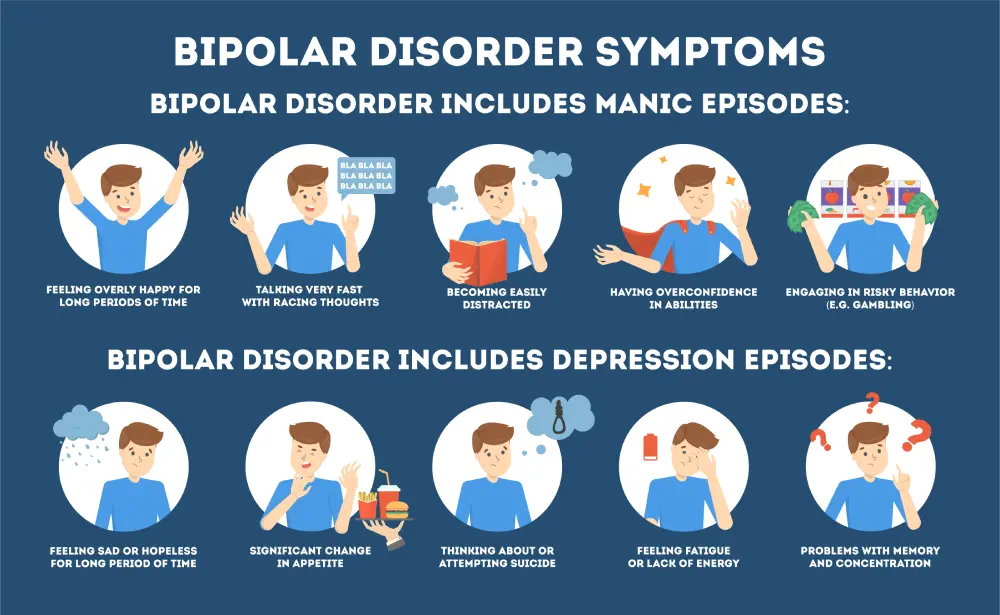
Symptoms of bipolar disorder typically occur in episodes that involve changes in mood, energy, and behavior. Depressive and manic symptoms may appear separately or, in some cases, together.
Symptoms During Depressive Episodes
- Persistent sadness or hopelessness
- Fatigue or low energy
- Sleep disturbances
- Loss of interest in activities
- Difficulty concentrating
- Appetite changes
- Feelings of worthlessness
Symptoms During Manic or Hypomanic Episodes
- Increased energy levels
- Elevated or irritable mood
- Rapid speech or racing thoughts
- Reduced need for sleep
- Impulsive behavior
- Increased self-confidence
- Difficulty focusing
Mood episodes may vary in duration and severity depending on the individual and the type of bipolar disorder.
What Causes Bipolar Disorder?
The exact cause of bipolar disorder is not fully understood, but it is believed to involve a combination of biological, genetic, and environmental factors. Changes in brain chemistry and emotional regulation mechanisms may contribute to symptom development.
Possible contributing factors include:
- Genetic predisposition
- Neurotransmitter imbalance
- Chronic stress exposure
- Traumatic life events
- Sleep disturbances
- Substance misuse
In many individuals, bipolar disorder develops through the interaction of multiple factors rather than a single cause.
What are the types of bipolar disorder?
Bipolar disorder may present in different forms depending on symptom severity and the nature of mood episodes.
Main types include:
- Bipolar I Disorder: Characterized by severe manic episodes that may occur with depressive episodes
- Bipolar II Disorder: Involves depressive episodes and hypomanic episodes, which are less severe than mania
- Cyclothymic Disorder: Includes ongoing mood fluctuations that do not fully meet criteria for major episodes
Accurate psychiatric evaluation is important for distinguishing between these forms and planning treatment accordingly.
What Are the Risk Factors for Bipolar Disorder?
Certain factors may increase the likelihood of developing bipolar disorder. Having these risk factors does not mean that the condition will definitely occur, but they may contribute to vulnerability.
Risk factors include:
- Family history of bipolar disorder
- Chronic stress exposure
- Traumatic experiences
- Substance or alcohol misuse
- Sleep irregularities
- Other mental health conditions
Mental health professionals evaluate these factors together with symptoms during psychiatric assessment.
What Are the Complications of Bipolar Disorder?
Without appropriate management, bipolar disorder may affect emotional, social, and occupational functioning. Mood episodes can interfere with relationships, academic performance, work life, and overall quality of life.
Possible complications include:
- Relationship difficulties
- Sleep disturbances
- Emotional distress
- Impaired work or school performance
- Substance misuse
- Increased anxiety symptoms
Early psychiatric support and long-term follow-up may help reduce the impact of complications.
How is Bipolar Disorder Diagnosed?
Bipolar disorder is diagnosed through psychiatric evaluation and detailed clinical assessment. Diagnosis is based on symptom history, mood episodes, behavioral changes, and emotional patterns over time.
Healthcare professionals may also evaluate sleep habits, medical history, and possible contributing conditions. Early diagnosis is important for developing an individualized treatment plan and supporting long-term emotional stability.
What are the Treatment Options for Bipolar Disorder?
Treatment for bipolar disorder is individualized according to symptom severity, episode frequency, and patient needs. Long-term management is often necessary to help maintain mood stability.
Treatment methods may include:
- Mood stabilizing medications
- Psychotherapy
- Cognitive behavioral therapy (CBT)
- Lifestyle and stress management support
- Sleep regulation strategies
- Psychiatric follow-up
Regular treatment adherence and ongoing psychiatric care are important parts of symptom management.
Can Bipolar Disorder Be Prevented?
Bipolar disorder cannot always be prevented because genetic and biological factors are important contributors. However, early recognition of symptoms and healthy lifestyle habits may help support emotional well-being and reduce certain triggers.
Ways that may support mental health include:
- Maintaining regular sleep habits
- Managing stress effectively
- Avoiding substance misuse
- Following psychiatric recommendations
- Maintaining social support systems
Early psychiatric support may help individuals recognize mood changes and seek timely care.
Bipolar Disorder Treatment in Turkey
Turkey provides comprehensive psychiatry and mental health services through hospitals and multidisciplinary healthcare centers. Bipolar disorder treatment in Turkey may include psychiatric evaluation, medication management, psychotherapy, and long-term follow-up depending on the patient’s symptoms and clinical needs.
At Medicana International, psychiatry services are provided by specialist physicians experienced in evaluating mood disorders and emotional health conditions. Treatment planning is individualized according to psychiatric assessment and patient needs.
Which department should I visit?
Individuals experiencing extreme mood changes, depressive symptoms, or episodes of unusually elevated energy and impulsive behavior should consult the Psychiatry department. Early psychiatric evaluation may help support emotional stability and daily functioning.

