


 Let Us Call You


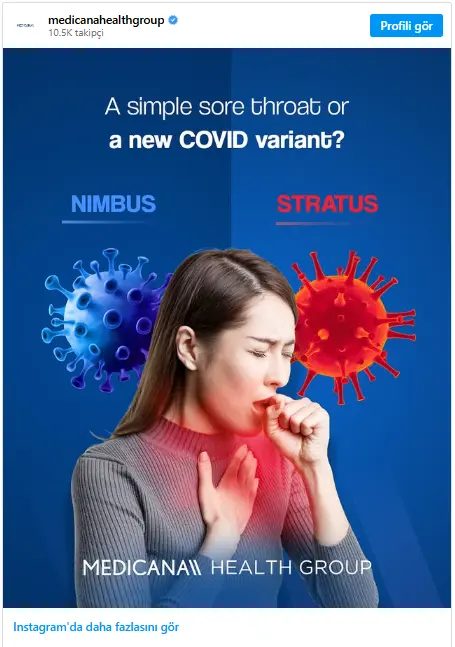
Both variants are offspring of the Omicron lineage and are currently under surveillance by global health authorities such as the World Health Organization (WHO) and the European Centre for Disease Prevention and Control. At Medicana Istanbul, infectious-disease specialists continuously monitor emerging COVID-19 variants like Nimbus and Stratus to protect public health in Turkey and beyond.
The new Stratus and Nimbus variants appear highly transmissible but so far show no evidence of causing severe disease. Nevertheless,early detection and awareness of Nimbus and Stratus COVID-19 symptoms remain essential for effective prevention and management.
COVID Variant Nimbus Symptoms
The Nimbus Covid variant (NB.1.8.1) appeared to be the offspring of Omicron and has been tracked in many nations since the beginning of 2025. Health specialists opine that Nimbus developed through genetic recombination in which various Omicron sublineages combined to develop a new variant.
Nimbus variant Covid symptoms are:
- Severe watery eyes that may cause irritation or social discomfort
- Persistent headache and fatigue
- Runny or blocked nose and nasal redness
- Cough with mild fever
- Muscle cramps, nausea, or diarrhea
The so-called “razor-blade throat” remains the most characteristic symptom of the Nimbus variant. At Medicana Istanbul, patients showing these signs are evaluated in the Infectious Diseases Department for timely care.

COVID Variant Stratus Symptoms
The new Stratus variant (XFG) of the COVID virus was discovered soon after the Nimbus and is currently widespread in Europe and North America. Researchers think it is a recomboinant strain with similar mutations to earlier Omicron subtypes, providing it with increased transmissibility.
The new Stratus variant of the COVID symptoms is in most cases similar to the previous Omicron variants but slightly different.
Typical Stratus COVID symptoms are:
- Painful cough
- Congestion and Sore Throat
- Hoarseness or raspy voice
- Fatigue and headache
- Fever or chills
- Loss of smell or taste
Physicians remark that Stratus variant symptoms resemble the strong flu or cold but tend to persist slightly longer, especially throat-connected irritation.

Causes and How These Variants Arise
Both the Stratus and the Nimbus variants formed through something called viral recombination when two variants in the same host cell infect the host and swap genetic material.
This enables the virus to accommodate immune responses and extrinsic pressures.
Amino acid sites in key positions, particularly in the spike protein, potentially enhance immune evasion or infectivity.
WHO all underscore that though the variants indicate immune escape potential, the vaccines do strong and effective protection against severe disease and hospitalization.
How to Protect Yourself from the New Nimbus and Stratus Strains
At this time, no new specific therapies are necessary for Nimbus or Stratus SARS-CoV infections. Health officials advise the same treatment for Omicron and its subvariants as follows:
Vaccinations and Boosters
Booster doses updated continue to be effective against severe illness in Nimbus and Stratus. Patients suffering from chronic diseases or low immune power must keep their vaccinations updated.
Antiviral Medications
Paxlovid and Remdesivir continue effective therapy for higher risk complications patients. Always call a doctor before beginning antiviral treatment.
Symptom Control
Relaxation, fluids, and over-the-counter medicines (acetaminophen or ibuprofen) relieve the sore throat and fever. For "razor-blade throat" with Nimbus COVID symptoms, throat lozenges and warm soothing teas can be relieiving.
Isolation and Public Health Precautions
Keep on wearing face mask in public places, ensure adequate ventilation, and maintain hand hygiene. Detection and earlier isolation continue essential in the avoidance of further transmission.
Potential Effects and Risks
Even though both the Nimbus and Stratus forms seem weak to medium in both instances, it is nonetheless capable of producing:
- High transmissibility, rising rate of infection
- Vaccine breakthrough cases in vaccinated persons
- Long COVID threats to certain patients such as tiredness, difficulty in concentration, or shortness of breath
- Exacerbated healthcare burden during peaks
- Vaccination and early detection are also essential in reducing long-term impacts
Prevention and Safety Precautions
- Keep up to date with COVID booster shots
- Keep an eye on yourself for any Nimbus or Stratus variant symptoms, especially cough or sore throat
- Test soon if symptomatic
- Use indoor air ventilation and mask-wearing in indoor areas with maximum risk
- Keep healthy habits to improve strength of immunity
If you are experiencing symptoms related to the Nimbus or Stratus variants, please fill out the contact form so that our medical team can reach out to you.
Which department should you visit when symptoms of the COVID Nimbus and Stratus variants appear?
When symptoms of the COVID Nimbus and Stratus variants appear, you should visit one of the following departments: Infectious Diseases, Pulmonology (Respiratory Medicine), or Internal Diseases. Common symptoms include: severe sore throat (“razor blade throat”), cough, fever, fatigue, and gastrointestinal issues such as nausea and diarrhea.