


 Let Us Call You


Measles (rubeola) is one of the most contagious viral infections known. It presents with high fever, cough, runny nose, conjunctival redness, and a characteristic widespread rash. In many individuals, the illness may resolve within approximately 10 days. However, in children and in individuals with weakened immune systems, it can manifest in a more severe course. The most effective way to prevent measles is vaccination.
Key Takeaways
- Measles is an extremely contagious viral infection that spreads easily through the air.
- It is characterized by high fever, respiratory symptoms, and a widespread rash.
- Vaccination is the most effective way to prevent measles.
- Two doses of the vaccine provide strong and long-lasting immunity and largely prevent outbreaks.
- The disease can follow a severe course in children, unvaccinated individuals, and people with weakened immune systems, potentially leading to serious complications such as pneumonia and encephalitis.
What is Measles?
Measles is a viral disease that affects humans and is easily transmitted from person to person through the air. It initially presents with flu-like symptoms for several days, followed by a rash that spreads across the entire body. Also known as rubeola, the measles virus can, in severe cases, lead to complications such as pneumonia or encephalitis.
Stages of measles
Measles is a contagious viral disease that progresses through distinct stages. Symptoms vary at each stage, and the overall course is typically completed within 2–3 weeks.
The stages of measles are as follows:
- Incubation period: Lasts 7–14 days and is asymptomatic
- Prodromal stage: Fever, cough, runny nose, and conjunctival rednes
- Rash stage: Red rash beginning on the face and spreading to the body
- Recovery stage: Fading of the rash and gradual reduction of symptoms
What do measles look like?
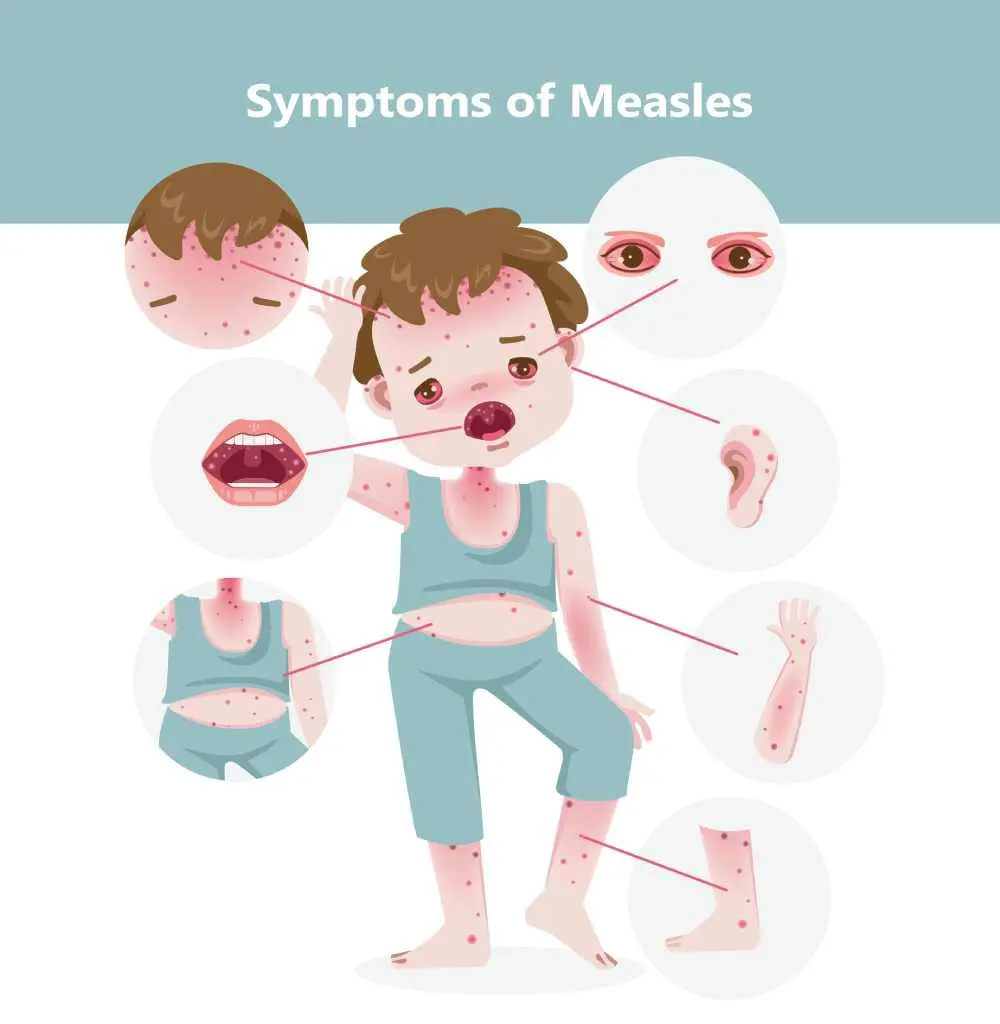
Measles typically presents with red rashes that begin on the face, particularly behind the ears. Over time, the rash spreads to the trunk, arms, and legs. High fever and redness of the eyes frequently accompany the clinical picture.
How is measles transmitted?
The measles virus is one of the most infectious diseases transmitted via the respiratory route. It spreads easily through airborne droplets released when an infected person coughs, sneezes, or speaks.
What Are the Symptoms of Measles?
Measles symptoms typically appear within 10–14 days after infection. Early signs may be mistaken for the common cold. As the disease progresses, the symptoms become more pronounced. Fever and the development of a characteristic skin rash are considered the most distinguishing features.
Symptoms of measles include:
- High fever
- Dry cough
- Runny nose
- Redness of the eyes and sensitivity to light
- Koplik spots inside the mouth
- Skin rash
What are koplik spots?
Koplik spots are among the most distinctive clinical features of measles. They usually appear shortly before or around the onset of the rash and serve as an important diagnostic clue. Koplik spots are characterized as follows:
- Located on the inner lining of the cheeks inside the mouth
- Appear as white or grayish spots
- Surrounded by a red background
Differences in symptoms between children and adults
Although measles can occur at any age, the severity of symptoms may vary depending on age. The risk of complications is generally higher in adults than in children. The main differences include
- In children: A milder course, with fever and rash being the predominant features
- In adults: Higher fever and an increased risk of complications such as pneumonia and liver involvement
Early symptoms of measles
Early-stage measles symptoms may be confused with influenza or the common cold. During this phase, symptoms may include:
- Fatigue
- High fever
- Runny nose
- Dry cough
- Watery eyes
What Causes Measles?
Measles is an infectious disease caused by a virus known as the measles virus. In individuals without immunity, exposure to the virus can easily lead to infection and result in significant weakness. The risk is considerably higher in unvaccinated individuals.
The causes of measles include:
- Exposure to the measles virus
- Being unvaccinated or incompletely vaccinated
- Staying in crowded and enclosed environments
What is causing measles outbreaks?
The most important cause of measles outbreaks is low vaccination coverage. Vaccine hesitancy among individuals and disruptions in immunization programs can lead to the rapid spread of the virus.
How is Measles Diagnosed?
To diagnose measles, clinical symptoms are first evaluated. This is followed by laboratory testing. The presence of characteristic rash and Koplik spots is assessed to determine whether the infection is measles. In addition, blood tests are used to support and confirm the diagnosis.
Methods used for measles diagnosis include:
- Physical examination
- Blood tests (antibody levels)
- Throat swab or urine sample
Treatment of Measles
There is no specific antiviral treatment for the measles virus. Management is focused on relieving symptoms and preventing complications. Most patients recover with supportive care.
Treatment approaches include:
- Antipyretic medications
- Adequate fluid intake
- Rest
- Vitamin A supplementation when clinically indicated
How Can Measles Be Prevented?
The most effective way to prevent measles is vaccination. Measles outbreaks can generally be prevented through immunization. High vaccination coverage across the community helps prevent outbreaks, while personal hygiene measures also reduce transmission.
Ways to prevent measles include:
- Receiving the measles vaccine
- Avoiding contact with infected individuals
- Maintaining proper hygiene in enclosed environments
Frequently Asked Questions About Measles
How effective is the measles vaccine?
When administered in two doses, the measles vaccine is known to be approximately 97% effective and provides long-lasting, robust immunity.
Can a person who has had measles get the disease again?
Individuals who have had measles generally develop lifelong immunity. Reinfection is considered extremely rare.
Is measles fatal?
Measles can lead to serious complications, particularly in infants, older adults, and individuals with weakened immune systems. In rare cases, it can be fatal.
Can vaccinated individuals still get measles?
The likelihood of measles in vaccinated individuals is very low. If it does occur, the disease usually follows a mild course.
Which department should be consulted for measles?
Individuals experiencing measles symptoms may apply to the Infectious Diseases department. In children, the Pediatrics department can also diagnose measles.


