


 Let Us Call You


Arrhythmia refers to a condition where the heart beats with an irregular or abnormal rhythm. While many heart rhythm changes are harmless, some can be life-threatening if they interfere with the heart's ability to pump blood effectively to the rest of the body. Understanding how the heart’s electrical system works is the first step in managing this condition, as modern medicine offers a wide range of therapies to help maintain a steady heartbeat and prevent complications like stroke or heart failure.
What is Arrhythmia?
The arrhythmia definition describes a disruption in the electrical impulses that coordinate your heartbeats, causing the heart to beat too fast, too slow, or irregularly. This occurs when the electrical signals that tell the heart muscle to contract do not travel through the heart properly. In a clinical sense, the arrhythmia meaning encompasses a broad spectrum of rhythm disturbances, ranging from a skipped beat that many people feel occasionally to chronic conditions that require long-term medical supervision.
Arrhythmia Causes
A heart arrhythmia can be triggered by a variety of factors, including underlying health conditions, lifestyle choices, and genetic predispositions.
- Heart Conditions: Coronary artery disease, heart valve disorders, and previous heart attacks.
- High Blood Pressure: Chronic hypertension can cause the walls of the heart to thicken, altering electrical pathways.
- Diabetes: Uncontrolled blood sugar increases the risk of developing rhythm issues.
- Electrolyte Imbalance: Abnormal levels of potassium, sodium, or calcium in the blood.
- Stimulants: Excessive caffeine, nicotine, alcohol, or certain medications.
- Sleep Apnea: Pauses in breathing during sleep put significant stress on the heart.
Arrhythmia Symptoms
The most common arrhythmia symptoms involve a sensation of a fluttering chest or a racing heartbeat, often referred to as palpitations.
- Palpitations
- Shortness of breath
- Chest pain
- Fatigue
- Lightheadedness
Signs Of Arrhythmia
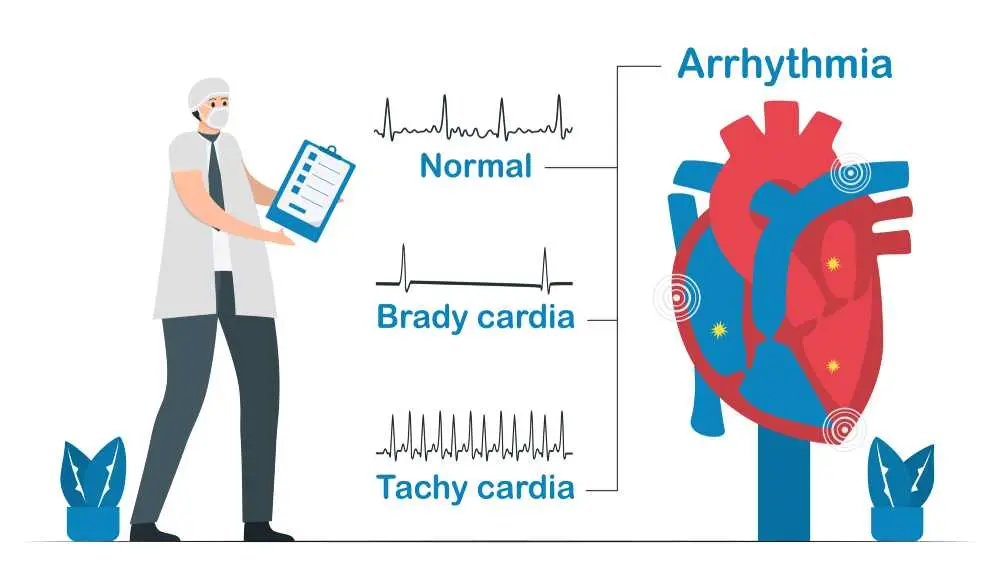
When diagnosing heart arrhythmia symptoms, medical professionals often look for physical signs like a pulse that is too rapid (tachycardia) or too slow (bradycardia).
- A heart rate that feels too fast, too slow, or lacks a steady, consistent thumping pattern.
- Paleness or excessive sweating (diaphoresis) during a sudden change in heart rhythm.
- A temporary loss of consciousness or fainting spells caused by a sudden drop in blood flow to the brain.
- The sensation or clinical observation of premature contractions followed by a brief pause.
- Visible pulsing in the neck veins that may indicate pressure changes in the heart chambers.
Types Of Arrhythmia
An arrhythmia classification is typically determined by where the irregular rhythm starts—either in the atria or the ventricles—and the speed of the heart rate.
Tachycardia
This refers to a fast heart rate, usually defined as a resting heart rate of more than 100 beats per minute.
Bradycardia
This is a slow heart rate, where the resting heart rate is less than 60 beats per minute, which may be normal for athletes but abnormal for others.
Atrial Fibrillation (AFib)
A very common type where the upper chambers of the heart beat irregularly and out of sync with the lower chambers.
Ventricular Arrhythmia
A ventricular arrhythmia starts in the lower chambers of the heart and is generally considered more dangerous, as it can stop the heart from pumping blood.
Sinus Arrhythmia
A sinus arrhythmia is a natural variation in the heart rate, often seen in healthy individuals where the rhythm changes slightly during the breathing cycle.
Respiratory Sinus Arrhythmia
The term respiratory sinus arrhythmia specifically refers to the benign increase in heart rate during inhalation and the decrease during exhalation.
Arrhythmia Diagnostic Methods
The heart arrhythmia disease is usually confirmed through an electrocardiogram (ECG), which records the electrical activity of the heart over a short period.
- Holter Monitor: A portable device worn for 24 to 48 hours to record heart activity during normal daily routines.
- Stress Test: Monitoring heart rhythm while the patient walks on a treadmill or pedals a stationary bike.
- Echocardiogram: Using ultrasound waves to produce images of the heart's size, structure, and motion.
- Event Monitor: Similar to a Holter monitor but used for longer periods, activated only when symptoms occur.
- Electrophysiology (EP) Study: A specialized test where catheters are inserted into the heart to map the electrical system.
Arrhythmia Treatment
Modern arrhythmia treatment focuses on controlling the heart rate, restoring a normal rhythm, and reducing the risk of blood clots. Healthcare providers often prescribe medications such as anti-arrhythmic drugs to stabilize the heart rate or anticoagulants to lower the risk of stroke. In some cases, a procedure called cardioversion is used to send a controlled electrical shock to the heart to "reset" its rhythm to normal.
Another highly effective option is catheter ablation, which uses heat or cold energy to destroy the tiny area of heart tissue responsible for irregular signals. For long-term rhythm management, a pacemaker can be implanted to send electrical pulses that keep the heart beating at a proper rate, while an ICD (Implantable Cardioverter Defibrillator) may be necessary to monitor the heart and deliver a life-saving shock if a dangerous rhythm is detected.
Frequently Asked Questions About Arrhythmia
What is the main cause of Arrhythmia?
The most common cause is an underlying heart condition, such as coronary artery disease or high blood pressure, which scars or alters the heart tissue.
Is Arrhythmia curable?
Many types can be permanently cured through procedures like catheter ablation, while others are managed effectively with medication or implanted devices.
Is a heart Arrhythmia serious?
While some are benign, others are very serious because they can lead to sudden cardiac arrest, stroke, or long-term heart failure if left untreated.
Can I live a normal life with Arrhythmia?
Most people lead active, normal lives by following their treatment plan, maintaining a heart-healthy diet, and avoiding triggers like excessive caffeine or stress.
Which medical department should be consulted for Arrhythmia?
You should consult the Cardiology department, specifically an Electrophysiologist, who is a cardiologist specializing in heart rhythm disorders.


