


 Let Us Call You


Rosacea is a chronic inflammatory skin condition that primarily affects the central area of the face, including the cheeks, nose, forehead, and chin. It often causes persistent redness that may become more noticeable over time and may be accompanied by visible blood vessels, bumps, or skin sensitivity.
Although rosacea is a long-term condition, its symptoms often occur in cycles, with periods of flare-ups followed by times when symptoms improve. While there is currently no cure for rosacea, appropriate medical treatment and lifestyle modifications may help manage symptoms and reduce flare-ups.
Key Takeaways
- Rosacea is a chronic inflammatory skin condition that mainly affects the face.
- Common symptoms include facial redness, visible blood vessels, and acne-like bumps.
- Heat, sunlight, spicy foods, stress, and alcohol are common triggers.
- Rosacea is diagnosed through clinical evaluation by a dermatologist.
- Treatment focuses on symptom management and trigger avoidance.
What is Rosacea?
Rosacea is a chronic skin disorder characterized by persistent facial redness and episodes of flushing. The condition usually develops gradually and most commonly affects adults.
Depending on the type and severity, rosacea may also cause:
- Visible facial blood vessels
- Small red bumps
- Pus-filled pimples
- Burning or stinging sensations
- Dry or sensitive skin
- Eye irritation in some individuals
Without appropriate management, symptoms may become more noticeable over time.
What Are the Symptoms of Rosacea?
Symptoms vary from person to person and may fluctuate over time.
Common signs and symptoms include:
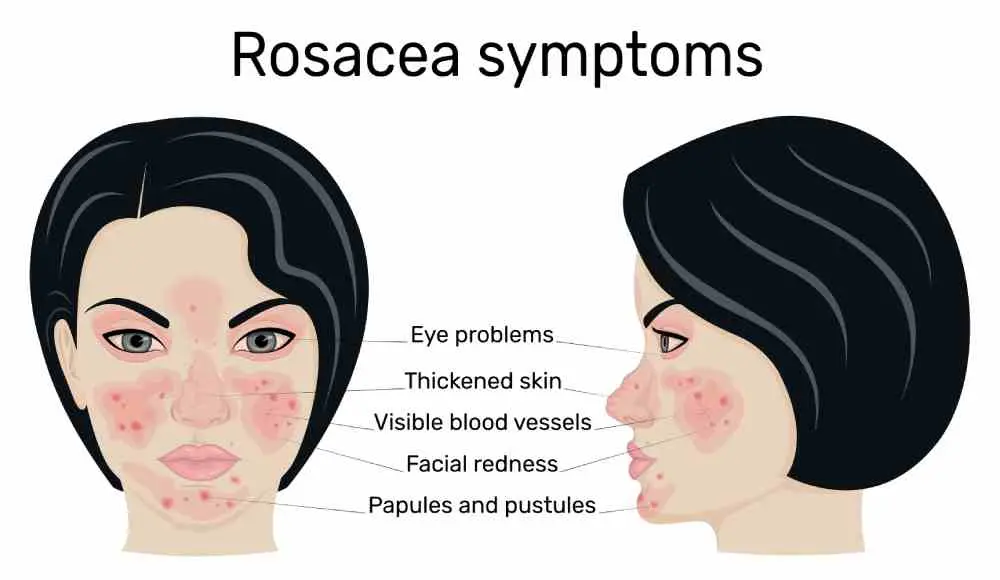
- Persistent redness across the cheeks and nose
- Frequent facial flushing
- Visible small blood vessels
- Acne-like bumps and pustules
- Skin sensitivity
- Burning or stinging sensation
- Swelling of the affected areas
Some individuals also experience eye-related symptoms such as:
- Dry eyes
- Eye irritation
- Watery eyes
- Red eyelids
- Sensitivity to light
Because ocular rosacea may affect eye health, persistent eye symptoms should be evaluated by a healthcare professional.
What Causes Rosacea?
The exact cause of rosacea remains unknown.
Experts believe the condition develops through a combination of factors, including:
- Genetic predisposition
- Immune system responses
- Environmental influences
- Blood vessel abnormalities
Rosacea is not caused by poor hygiene and is not contagious.
 ,
,
What Can Trigger Rosacea?
Although triggers vary between individuals, certain factors are commonly associated with rosacea flare-ups.
Common triggers include:
- Sun exposure
- Hot weather
- Cold wind
- Emotional stress
- Hot beverages
- Spicy foods
- Alcohol
- Vigorous exercise
- Certain skin care products
- Hot baths and saunas
Identifying and avoiding personal triggers may help reduce symptom flare-ups.
Who is at Risk of Rosacea?
Rosacea can affect anyone but is more commonly seen in:
- Adults between 30 and 50 years of age
- Individuals with fair skin
- People with a family history of rosacea
- Women (although men may develop more severe skin thickening)
Having one or more risk factors does not necessarily mean someone will develop rosacea.
How is Rosacea Diagnosed?
There is no single laboratory test used to diagnose rosacea.
Diagnosis is usually based on:
- Medical history
- Skin examination
- Evaluation of symptoms
- Identification of typical clinical features
A dermatologist may also evaluate other skin conditions with similar symptoms before confirming the diagnosis.
How is Rosacea Treated
Although rosacea cannot currently be cured, treatment can help manage symptoms, reduce flare-ups, and improve quality of life.
Treatment depends on the type and severity of rosacea and may include:
- Topical medications
- Prescription creams or gels may help reduce facial redness and inflammatory bumps.
- Oral medications
In some cases, oral medications may be recommended to help manage inflammatory symptoms.
Laser and Light-Based Treatments
Laser or light therapies may help reduce visible blood vessels and persistent facial redness in selected individuals.
Treatment recommendations should always be individualized following evaluation by a healthcare professional.
Lifestyle and Skin Care Tips for Rosacea
Daily skin care and lifestyle habits play an important role in managing rosacea.
Healthcare professionals commonly recommend:
- Using broad-spectrum sunscreen every day
- Choosing gentle skin care products
- Avoiding harsh exfoliants
- Washing the face with mild cleansers
- Moisturizing regularly
- Avoiding known personal triggers
- Protecting the skin from extreme temperatures
Keeping a symptom diary may help identify individual trigger factors.
Can Rosacea Be Prevented?
Rosacea cannot always be prevented because its exact cause remains unclear.
However, individuals diagnosed with rosacea may help reduce flare-ups by:
- Protecting their skin from sun exposure
- Following a gentle skincare routine
- Identifying dietary or environmental triggers
- Managing stress
- Seeking medical advice when symptoms worsen
Early diagnosis and appropriate management may help improve long-term symptom control.
Clinical Insight: Managing Rosacea Requires an Individualized Approach
Rosacea is a chronic skin condition that often requires long-term management rather than short-term treatment. Because triggers and symptoms vary between individuals, treatment plans are typically personalized.
Medical therapy, trigger avoidance, sun protection, and gentle skincare routines work together to help manage symptoms and support skin health.
Which department should I visit?
Individuals experiencing persistent facial redness, flushing, acne-like bumps, visible facial blood vessels, or eye symptoms associated with rosacea should consult the Dermatology department for evaluation and appropriate management.


