


 Let Us Call You


Plastic surgery is a medical specialty focused on the reconstruction, repair, and modification of body structures for both functional and aesthetic purposes. It includes both reconstructive and cosmetic procedures. At Medicana Health Group, plastic surgery services are provided by specialist physicians in accredited hospital settings, in accordance with national and international medical standards.
Turkey particularly Istanbul is frequently preferred by international patients for plastic surgery due to its well-developed healthcare infrastructure and experienced medical professionals.
Key Takeaways
- Plastic surgery is divided into Reconstructive Surgery and Cosmetic (Aesthetic) Surgery.
- Turkey is a leading destination for international patients seeking plastic surgery, especially in Istanbul.
- Advanced techniques such as laser treatments, endoscopic surgery, FUE hair transplantation, and minimally invasive procedures help reduce recovery time.
- Medicana Health Group provides comprehensive care for both local and international patients.
What is Plastic Surgery?
Plastic surgery is a surgical specialty that focuses on repairing, reshaping, or enhancing body structures. It includes:
- Reconstructive procedures (burn repair, tumor reconstruction, cleft lip and palate repair)
- Cosmetic procedures (rhinoplasty, liposuction, facelift, breast surgery)
The main goal is to restore function while achieving a natural and harmonious appearance.
If you are searching for plastic surgery in Turkey, Medicana offers personalized treatment plans tailored to your medical condition and aesthetic goals.
What Does Plastic Surgery Involve?
The plastic surgery departments in the hospitals run by Medicana Health Group provide a wide range of services to improve people's physical appearance, self-confidence, and quality of life. Some of the services are as follows:
Facial Plastic Surgery in Turkey
Facial plastic surgery procedures aim to modify facial structures while maintaining anatomical balance and proportion. These surgeries may address both functional concerns and aesthetic preferences. All procedures are planned according to patient needs and medical suitability.
Rhinoplasty
Rhinoplasty is performed to reshape the nose or improve breathing function when medically indicated. The procedure may involve structural modification of bone and cartilage. Suitability is determined after clinical examination.
Facelift
Facelift surgery is performed to address skin laxity and age-related facial changes. The procedure may involve repositioning underlying tissues and removing excess skin. Recovery time varies depending on the surgical technique.
Blepharoplasty
Blepharoplasty removes excess skin and fat from the upper or lower eyelids. It may be considered for functional vision obstruction or aesthetic concerns. The procedure is typically performed under local or general anesthesia.
Otoplasty
Otoplasty is performed to correct prominent or asymmetrical ears. The procedure reshapes the cartilage structure to achieve improved proportion. It is commonly performed in both children and adults when appropriate.
Breast Surgery in Istanbul
Breast surgery includes procedures performed for reconstructive or aesthetic purposes. Treatment decisions are based on patient expectations, medical history, and physical examination findings.
Breast Augmentation
Breast augmentation increases breast volume using implants or alternative techniques when appropriate. Implant type and surgical approach are selected individually. Regular follow-up may be required.
Breast Lift (Mastopexy)
A breast lift addresses sagging by repositioning breast tissue and removing excess skin. The goal is to improve breast contour rather than increase size. Surgical planning varies by degree of ptosis.
Breast Reduction
Breast reduction removes excess breast tissue, fat, and skin. It may be considered in cases where large breasts contribute to physical discomfort. Postoperative monitoring is important for optimal recovery.
Breast Reconstruction
Breast reconstruction is performed after mastectomy or trauma. It may involve implants or autologous tissue techniques. The surgical plan depends on oncological treatment history and patient preference.
Gynecomastia Surgery
Gynecomastia surgery reduces excess male breast tissue. The procedure may involve liposuction, tissue excision, or a combination of both. Suitability is determined after endocrine and surgical evaluation.
Body Contouring Surgery
Body contouring procedures are performed to remove excess skin or localized fat deposits. These surgeries are not weight-loss treatments and are recommended for patients near their target weight. Surgical planning depends on skin elasticity and overall health condition.
Liposuction
Liposuction removes localized fat deposits that may not respond to diet and exercise. The technique used depends on the treatment area and physician assessment. Temporary swelling and bruising may occur post-procedure.
Tummy Tuck (Abdominoplasty)
Abdominoplasty removes excess abdominal skin and may include muscle repair if necessary. It is commonly considered after pregnancy or significant weight loss. Recovery time varies based on surgical extent.
Arm Lift (Brachioplasty)
Arm lift surgery removes excess skin from the upper arms. The procedure is typically considered after weight loss or age-related skin laxity. Scarring patterns vary depending on incision length.
Thigh Lift
A thigh lift reshapes the inner or outer thigh by removing excess skin and fat. It may be combined with liposuction when appropriate. Postoperative compression garments are usually recommended.
Buttock Lift
A buttock lift addresses sagging skin in the gluteal region. The procedure focuses on tissue repositioning rather than volume enhancement. Surgical technique depends on skin condition and patient anatomy.
Mommy Makeover
A mommy makeover combines multiple procedures, often including breast and abdominal surgery. The surgical plan is customized based on patient goals and medical evaluation. Procedures may be performed in a single session or staged.
Skin Rejuvenation
Skin rejuvenation refers to a group of non-surgical cosmetic procedures designed to improve skin appearance and texture. These treatments aim to address concerns such as fine lines, uneven tone, pigmentation changes, and loss of skin elasticity. The appropriate method is determined based on individual skin type and medical evaluation.
Common skin rejuvenation procedures include:
Botulinum Toxin Injections (Botox)
Botulinum toxin is used to temporarily reduce the appearance of dynamic wrinkles caused by facial muscle movement. The procedure is performed through small injections in targeted areas. The duration of effect varies by individual.
Dermal Fillers
Dermal fillers are injectable substances used to restore facial volume and support soft tissues. Different filler materials, such as hyaluronic acid-based products, may be selected depending on the treatment area. Results and duration vary depending on the product used and individual factors.
Laser Resurfacing
Laser resurfacing uses controlled light energy to target the outer layers of the skin. It may be considered for uneven texture, pigmentation changes, or fine lines. Treatment type and intensity depend on skin condition and physician assessment.
Chemical Peels
Chemical peels involve the application of a solution to exfoliate the outer layers of the skin. They may be used for concerns such as acne marks, pigmentation irregularities, or superficial wrinkles. The depth of the peel is selected according to skin needs.
Microdermabrasion
Microdermabrasion is a surface exfoliation procedure that removes dead skin cells using a mechanical device. It is typically used to improve skin texture and brightness. Multiple sessions may be recommended.
IPL (Intense Pulsed Light)
IPL treatment uses light energy to target pigmentation irregularities and visible vascular changes. It may be considered for sun-related skin changes. Suitability depends on skin tone and condition.
Radiofrequency (RF) Treatments
Radiofrequency applications deliver controlled heat energy to deeper skin layers. This treatment may be used to address mild skin laxity. The number of sessions required varies individually.
The selection of a skin rejuvenation procedure depends on skin characteristics, medical history, and treatment expectations. A clinical consultation is necessary to determine suitability.
Non-Invasive Procedures
Non-surgical aesthetic treatments are performed without incisions and typically require minimal downtime. These procedures aim to improve skin texture, tone, or volume. Treatment selection depends on skin type and individual expectations.
Common treatments may include:
- Botulinum toxin injections
- Dermal fillers
- Laser-based skin applications
- Chemical peels
- Radiofrequency treatments
- IPL procedures
Reconstructive Plastic Surgery
Reconstructive surgery focuses on restoring function and structure after trauma, cancer treatment, or congenital conditions. These procedures are medically indicated and may involve multidisciplinary planning. Treatment complexity varies depending on the condition.
Common reconstructive procedures include:
- Cleft lip and palate repair
- Craniofacial surgery
- Hand surgery
- Scar revision
- Breast reconstruction
- Tissue expansion
- Microsurgical reconstruction
Hair Transplant in Turkey
Hair transplantation is performed to relocate hair follicles from donor areas to areas affected by hair loss. The procedure is carried out under local anesthesia when appropriate. Outcomes vary depending on hair quality, donor capacity, and individual factors.
Common techniques include:
- FUE (Follicular Unit Extraction)
- FUT (Follicular Unit Transplantation)
- DHI (Direct Hair Implantation)
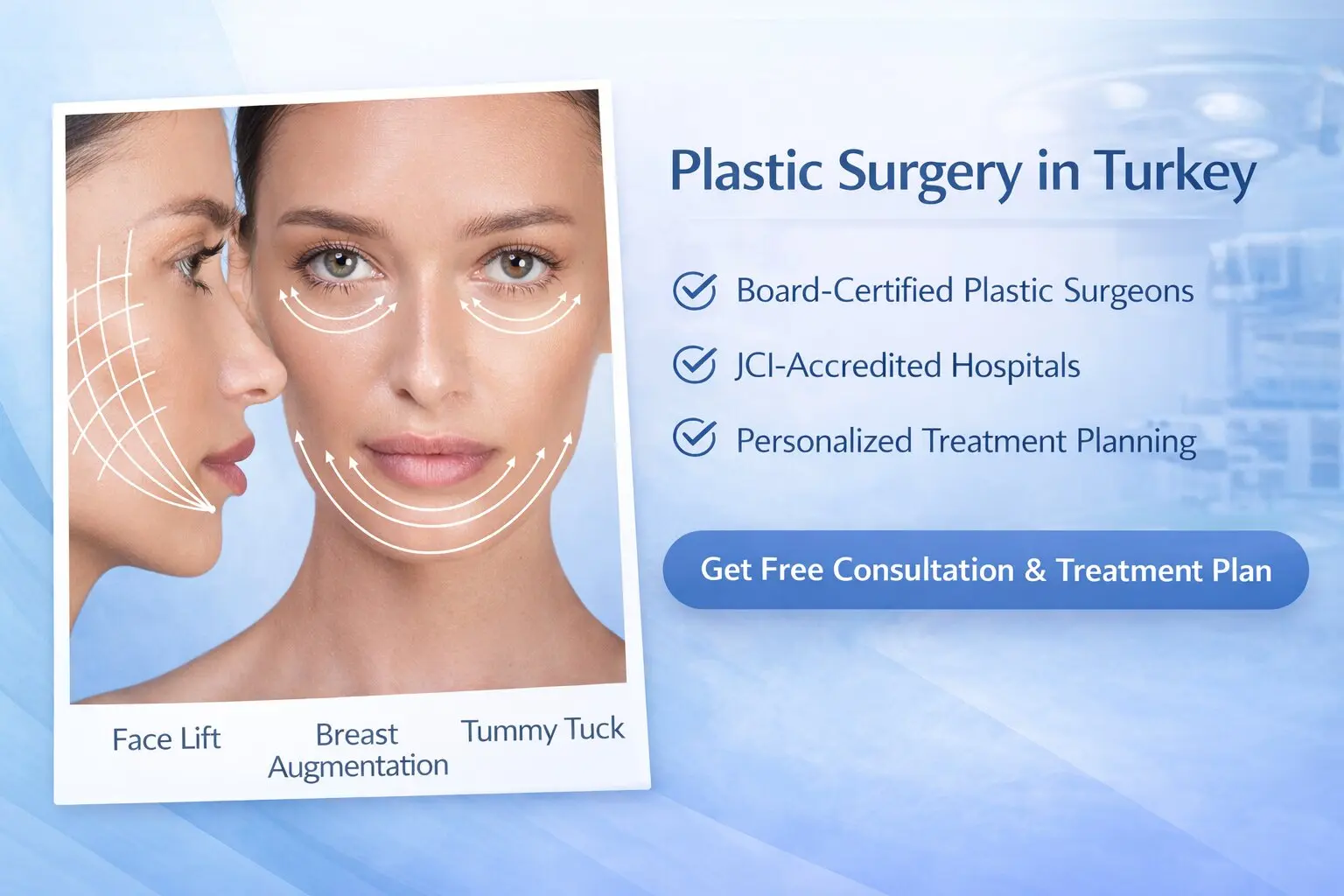
Plastic Surgery Cost in Turkey
The cost of plastic surgery in Turkey varies depending on the type of procedure, surgical complexity, hospital conditions, and length of stay. Pricing may differ between reconstructive and cosmetic procedures.
For international patients, treatment plans are prepared individually after medical evaluation. Detailed cost information is provided following consultation and clinical assessment.
Recovery Time After Plastic Surgery
Recovery time after plastic surgery depends on the type of procedure, surgical technique, and individual healing response. Minimally invasive procedures may require shorter recovery periods, while more extensive surgeries may require several weeks.
Patients receive post-operative instructions tailored to their procedure. Follow-up appointments are scheduled to monitor healing progress.
Why Choose Medicana Health Group?
Medicana Health Group provides plastic surgery services in accredited hospital environments. Multidisciplinary teams and international patient units coordinate treatment processes. All procedures are performed following medical evaluation and informed consent.
Plastic Surgery in Turkey for International Patients
Turkey is frequently preferred by international patients seeking plastic surgery due to its hospital infrastructure and multidisciplinary care model. Treatment processes are coordinated through international patient departments.
Pre-operative evaluation, surgical planning, and follow-up processes are organized individually. Travel and accommodation arrangements are managed separately from medical decision-making.


