


 Let Us Call You


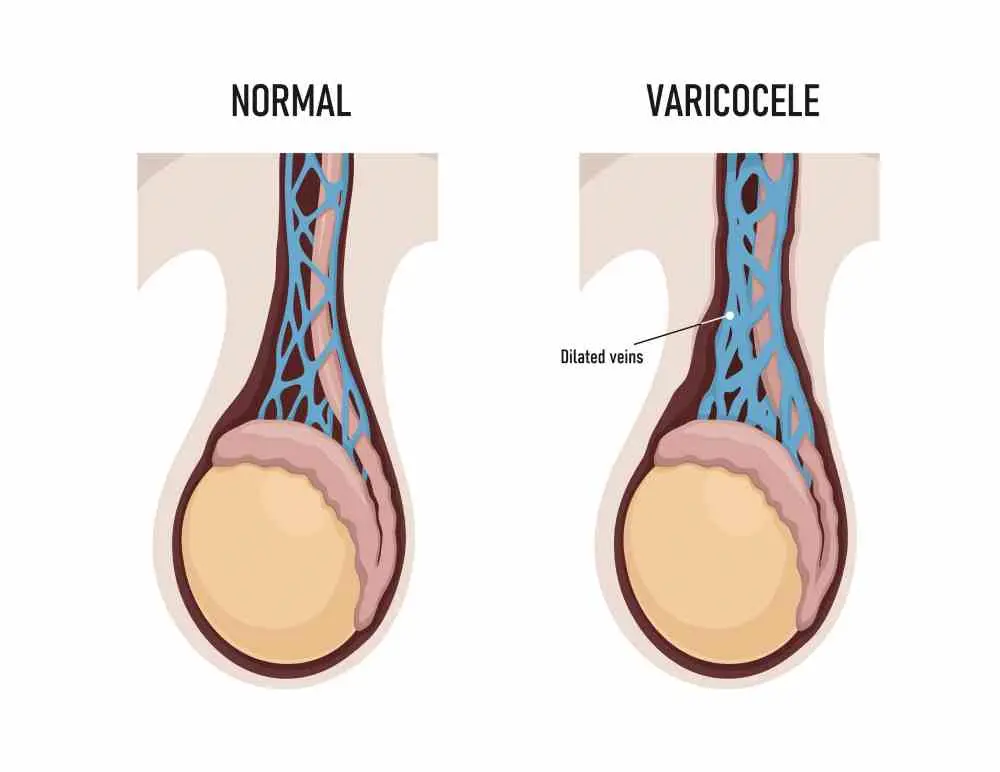
A varicocele is an enlargement of the veins within the scrotum, the loose pouch of skin that holds the testicles. It develops when blood pools in the veins instead of flowing normally back toward the heart, causing the veins to become enlarged and twisted. A varicocele is similar to a varicose vein that develops in the legs.
Varicoceles are common and often develop during puberty. Many men with a varicocele experience no symptoms and may not require treatment. However, in some cases, a varicocele can cause pain, testicular shrinkage, or fertility problems.
Because varicoceles may affect sperm production and quality, they are one of the most common potentially treatable causes of male infertility. Early evaluation by a urologist can help determine whether treatment is appropriate based on symptoms, fertility goals, and overall health.
Key Takeaways
- A varicocele is an enlargement of the veins inside the scrotum.
- It most commonly develops on the left side.
- Many men have no symptoms and do not require treatment.
- Some varicoceles may contribute to pain, reduced testicular size, or fertility problems.
- Treatment depends on symptoms, fertility concerns, and examination findings.
What is a Varicocele?
A varicocele occurs when the veins of the spermatic cord become enlarged because blood does not drain efficiently. These veins normally help carry oxygen-depleted blood away from the testicles. When the valves inside the veins do not function properly, blood can collect, causing the veins to dilate.
Varicoceles are most often found on the left side because of differences in the anatomy of the veins that drain the testicles. Some men may develop varicoceles on both sides, although this is less common.
Most varicoceles develop gradually and may remain stable for many years.
What Causes a Varicocele?
The exact cause of a varicocele is not always clear. Experts believe it develops when the valves inside the veins of the spermatic cord fail to function normally. These valves normally help blood flow upward toward the heart. When they do not close properly, blood can pool within the veins, increasing pressure and causing them to enlarge.
The anatomy of the left testicular vein also contributes to the higher frequency of left-sided varicoceles.
Although anyone can develop a varicocele, it is most commonly diagnosed during adolescence or early adulthood.
Signs and Symptoms of a Varicocele
Many men with a varicocele have no symptoms and discover the condition during a routine physical examination or fertility evaluation.
When symptoms occur, they may include:
- A dull or aching pain in the scrotum
- A feeling of heaviness in the testicle
- Enlarged or twisted veins that may feel like a "bag of worms"
- Discomfort that becomes worse after standing for long periods or physical activity
- Symptoms that improve when lying down
- One testicle appearing smaller than the other
The severity of symptoms varies from person to person, and the size of the varicocele does not always correspond to the degree of discomfort.
Can a Varicocele Affect Fertility?
A varicocele is one of the most common conditions associated with male infertility. Although many men with a varicocele are able to father children naturally, some may experience reduced fertility.
Researchers believe that impaired blood flow may increase the temperature around the testicle. Since sperm production requires a temperature slightly lower than normal body temperature, this increase may affect sperm development.
A varicocele may also influence sperm concentration, movement (motility), and shape (morphology). However, not every man with a varicocele experiences abnormal semen parameters, and not every case of infertility is caused by a varicocele.
If pregnancy has not occurred after a period of regular, unprotected intercourse, a healthcare professional may recommend evaluating both partners, including a semen analysis for the male partner.
How is a Varicocele Diagnosed?
Diagnosis usually begins with a medical history and physical examination. During the examination, the healthcare provider may ask the patient to stand, as varicoceles are often easier to detect when standing.
Patients may also be asked to perform the Valsalva maneuver, which involves taking a deep breath and gently bearing down. This increases pressure inside the abdomen and may make the enlarged veins easier to identify.
If the physical examination is inconclusive or additional information is needed, a scrotal ultrasound may be performed. Ultrasound uses sound waves to visualize the veins, assess blood flow, and confirm the diagnosis
Imaging also helps exclude other conditions that may cause scrotal swelling or pain.
Varicocele Grades
Healthcare professionals often classify varicoceles according to their size during physical examination.
- Grade I: Small; detectable only during the Valsalva maneuver.
- Grade II: Easily felt while standing but not visible.
- Grade III: Large enough to be both visible and easily felt during examination.
The grade helps describe the severity of the varicocele but does not necessarily predict symptoms or fertility outcomes.
Treatment Options for Varicocele
Not every varicocele requires treatment. Many men have no symptoms and experience no problems with fertility. In these cases, regular monitoring may be all that is needed.
Treatment may be recommended if a varicocele:
- Causes persistent scrotal pain or discomfort
- Is associated with infertility and abnormal semen analysis results
- Leads to reduced testicular growth, particularly during adolescence
- Causes testicular atrophy (shrinkage)
The most appropriate treatment depends on the severity of symptoms, fertility goals, age, and overall health.
Observation
For men without symptoms or fertility concerns, healthcare providers may recommend observation rather than immediate treatment.
Regular follow-up appointments can help monitor any changes in symptoms or testicular health. Maintaining open communication with your healthcare provider is important if pain develops or fertility becomes a concern in the future.
Pain Management
Mild discomfort caused by a varicocele may sometimes be managed without surgery.
Your healthcare provider may recommend:
- Over-the-counter pain relievers when appropriate
- Wearing supportive underwear or an athletic supporter
- Limiting activities that worsen discomfort
- Resting when symptoms become more noticeable
If pain persists despite conservative measures, additional evaluation may be necessary.
Microsurgical Varicocelectomy
Microsurgical varicocelectomy is considered one of the most commonly performed surgical treatments for varicocele.
During the procedure, the surgeon makes a small incision, usually in the groin area, and uses a surgical microscope to identify and seal the enlarged veins while preserving nearby arteries, lymphatic vessels, and the vas deferens.
By redirecting blood flow through healthy veins, the procedure helps improve circulation around the testicle.
Microsurgical techniques are widely used because they allow precise identification of blood vessels and may reduce the risk of complications.
Laparoscopic Varicocelectom
Laparoscopic surgery is another surgical option for treating varicocele.
During this minimally invasive procedure, the surgeon inserts a laparoscope—a thin tube with a camera—through small abdominal incisions to locate and seal the affected veins.
Although laparoscopic surgery generally requires only small incisions, it is performed less frequently than microsurgical repair in many centers.
Your urologist will recommend the most appropriate surgical approach based on your individual condition and medical history.
Varicocele Embolization
Varicocele embolization is a minimally invasive procedure performed by an interventional radiologist.
Instead of making a surgical incision, a thin catheter is inserted into a vein, usually through the groin or neck. Using imaging guidance, the physician places tiny coils or a special solution inside the affected vein to block abnormal blood flow.
This allows blood to be redirected through healthy veins, reducing pressure within the enlarged veins of the scrotum.
Embolization may be considered for selected patients, particularly when surgery is not suitable or when a recurrent varicocele develops after previous treatment.
Recovery After Varicocele Treatment
Recovery depends on the type of treatment performed.
Most patients can return to light daily activities within a few days after minimally invasive procedures or surgery. However, strenuous exercise, heavy lifting, and sexual activity may need to be postponed for several weeks, depending on the surgeon's recommendations.
Mild swelling, bruising, or discomfort around the treatment area is common during the early recovery period and usually improves gradually.
Patients undergoing treatment for infertility may require follow-up semen analyses several months after the procedure, as sperm production naturally takes time to improve.
Possible Complications If Left Untreated
Many varicoceles remain stable and never cause significant health problems.
However, in some individuals, an untreated varicocele may be associated with:
- Persistent scrotal discomfort
- Progressive testicular shrinkage
- Reduced sperm quality
- Fertility difficulties
Not every untreated varicocele leads to complications. Decisions regarding treatment should be based on symptoms, fertility goals, and clinical evaluation rather than the size of the varicocele alone.
Clinical Insight
Varicocele is one of the most common and often treatable conditions affecting the veins of the scrotum. While many men never require treatment, evaluation by a urologist is recommended if symptoms develop or fertility becomes a concern.
Treatment decisions should be individualized. Factors such as pain, semen analysis results, testicular size, age, and future family planning goals all play an important role in determining the most appropriate management approach.
Early assessment allows healthcare professionals to identify patients who may benefit from treatment while avoiding unnecessary procedures in those without symptoms or fertility concerns.
Which department should I visit?
If you experience persistent scrotal pain, notice enlarged veins within the scrotum, or have concerns about fertility, you should consult the following department:
Depending on your fertility evaluation, your urologist may also recommend consultation with a Reproductive Medicine or Infertility specialist when appropriate.


