


 Let Us Call You


The common cold is one of the most frequent viral infections, affecting millions of people each year. While there is no instant cure, applying the right strategies early can help reduce symptom severity and support faster recovery. Many people search for ways to stop a cold fast, especially when symptoms begin to interfere with daily life. Effective cold treatment focuses on strengthening the immune system and relieving discomfort. With proper care, it is possible to manage symptoms and shorten the duration of illness.
What is the Common Cold?
The common cold is a viral infection that affects the upper respiratory tract, including the nose and throat. It is usually caused by viruses such as rhinoviruses and spreads easily through contact or airborne droplets. Although generally mild, symptoms can last from a few days up to 10 days. There is no definitive cure, but symptom-based care plays a key role in recovery. Managing early symptoms is essential when trying to stop a cold fast.
What are Cold Symptoms?
Cold symptoms typically develop gradually and may vary from person to person. Early recognition allows individuals to take steps to relieve symptoms and recover more comfortably. While most colds are mild, they can still affect energy levels and daily activities. Proper symptom management is important for faster recovery.
Common symptoms include:
- Runny or blocked nose
- Sore throat
- Cough
- Sneezing
- Mild fever
- Fatigue
- Headache
- Body aches
What Causes a Cold?
Colds are caused by viruses that enter the body through the nose, mouth, or eyes. These viruses spread easily, especially in crowded environments or during seasonal changes. The immune system responds by triggering inflammation, which leads to typical cold symptoms. Since antibiotics do not work against viruses, treatment focuses on relieving symptoms. Understanding the cause helps guide effective cold management strategies.
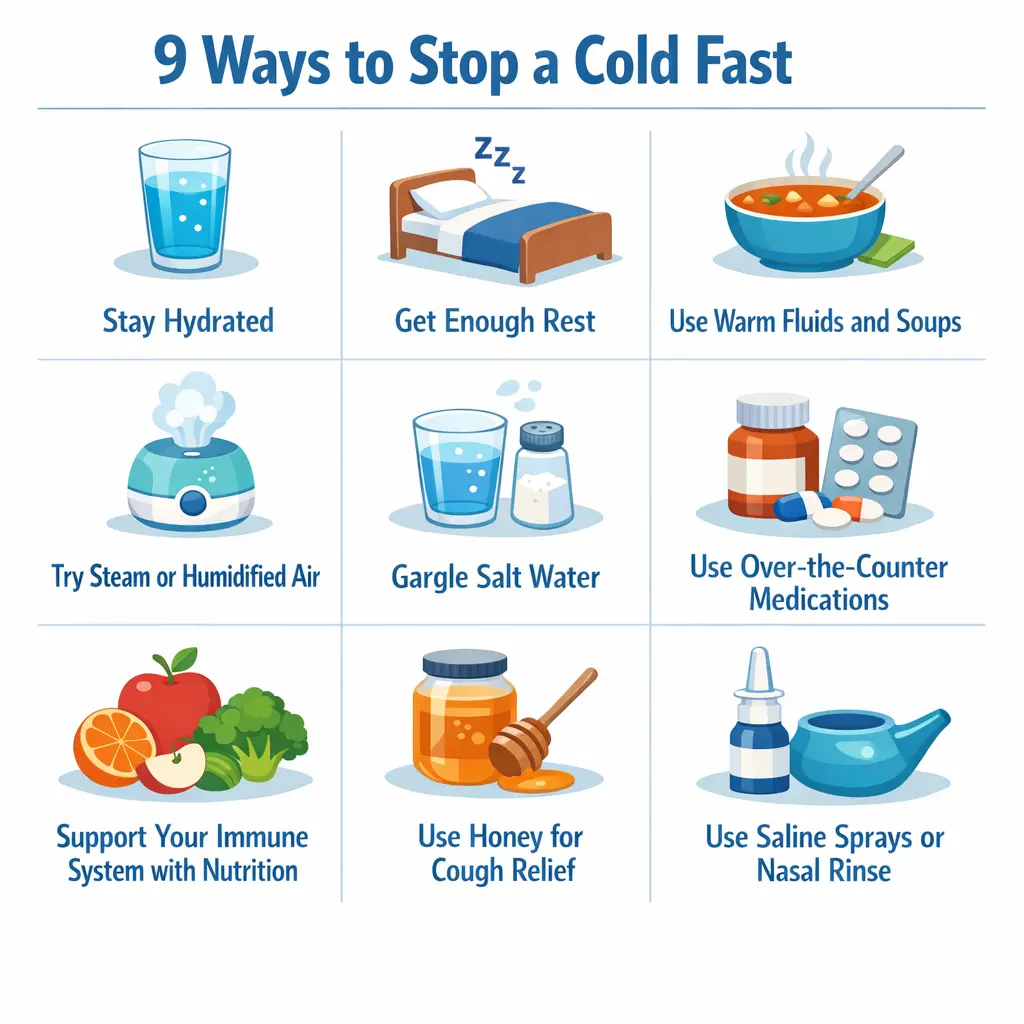
9 Ways to Stop a Cold Fast
1. Stay Hydrated
Drinking plenty of fluids is one of the most effective ways to support recovery. Water, herbal teas, and warm broths help thin mucus and reduce congestion. Proper hydration also prevents dehydration, which can worsen symptoms. Warm liquids may additionally soothe the throat and improve comfort.
2. Get Enough Rest
Rest allows the immune system to focus on fighting the infection. Sleep plays a critical role in recovery and can help reduce the duration of symptoms. When the body is well-rested, it can respond more effectively to viral infections. Reducing physical stress is key during this period.
3. Use Warm Fluids and Soups
Warm foods like soup can provide both hydration and comfort. They may also help reduce inflammation and loosen mucus. Nutrient-rich meals support the immune system during illness. Light, easy-to-digest foods are especially beneficial when appetite is low.
4. Try Steam or Humidified Air
Moist air can help relieve nasal congestion and throat irritation. Steam from a shower or a humidifier helps loosen mucus, making breathing easier. This method is particularly useful for dry indoor environments. Keeping airways moist can improve overall comfort.
5. Gargle Salt Water
A saltwater gargle can soothe a sore throat and reduce inflammation. This simple remedy helps clear irritation and may reduce bacteria in the throat. It is a safe and effective home method for symptom relief. Regular use can provide noticeable comfort.
6. Use Over-the-Counter Medications
Non-prescription medications can help manage symptoms such as pain, fever, and congestion. Decongestants, antihistamines, and pain relievers are commonly used. These treatments do not cure the cold but can improve daily functioning. Always follow recommended dosages and medical advice.
7. Support Your Immune System with Nutrition
Eating nutrient-rich foods helps the body fight infection more effectively. Foods high in vitamins and antioxidants support immune function. Maintaining a balanced diet during illness can improve recovery time. Proper nutrition is a key part of cold management.
8. Use Honey for Cough Relief
Honey is known for its soothing effect on the throat and its natural antimicrobial properties. It may help reduce coughing, especially at night. This can improve sleep quality, which is essential for recovery. Honey is often used as a natural remedy for cold symptoms.
9. Use Saline Sprays or Nasal Rinse
Saline solutions help clear nasal passages and reduce congestion. Nasal rinsing can remove irritants and mucus from the sinuses. This method supports easier breathing and symptom relief. It is widely recommended as part of treating cold symptoms.
When Should You See a Doctor?
Most colds resolve on their own, but medical attention may be necessary if symptoms persist or worsen. If symptoms last longer than 10 days or become severe, evaluation is recommended. High fever, difficulty breathing, or chest pain may indicate complications. Early medical care ensures proper diagnosis and treatment.
Can a Cold Be Prevented?
Although it is not always possible to prevent a cold, certain habits can reduce the risk. Preventive measures focus on limiting exposure to viruses and supporting immune health. Good hygiene and a healthy lifestyle play an important role. Consistency in these habits helps reduce infection rates.
Prevention tips include:
- Wash hands regularly
- Avoid close contact with sick individuals
- Maintain a balanced diet
- Get enough sleep
- Stay physically active
- Avoid smoking
Which department should ı visit?
For persistent or severe cold symptoms, patients should consult the Internal Diseases or ENT department. In Turkey, experienced specialists provide comprehensive evaluation and treatment for respiratory conditions.