


 Let Us Call You


Garlic is one of the most widely used culinary ingredients worldwide and has been valued for centuries in both cooking and traditional wellness practices. Beyond its distinctive flavor and aroma, garlic contains bioactive compounds, antioxidants, vitamins, and minerals that contribute to its nutritional value.
Much of garlic's potential health-promoting activity is linked to sulfur-containing compounds, particularly allicin, which forms when garlic is chopped, crushed, or chewed. Because of these compounds, garlic is commonly associated with cardiovascular wellness, immune support, and healthy aging.
Key Takeaways
- Garlic contains antioxidants, sulfur compounds, vitamins, and minerals that may support overall health.
- Garlic is commonly associated with heart health and immune wellness.
- Allicin is one of the most studied compounds found in garlic.
- Garlic may provide antioxidant and anti-inflammatory properties.
- Both raw and cooked garlic can be included in a balanced diet.
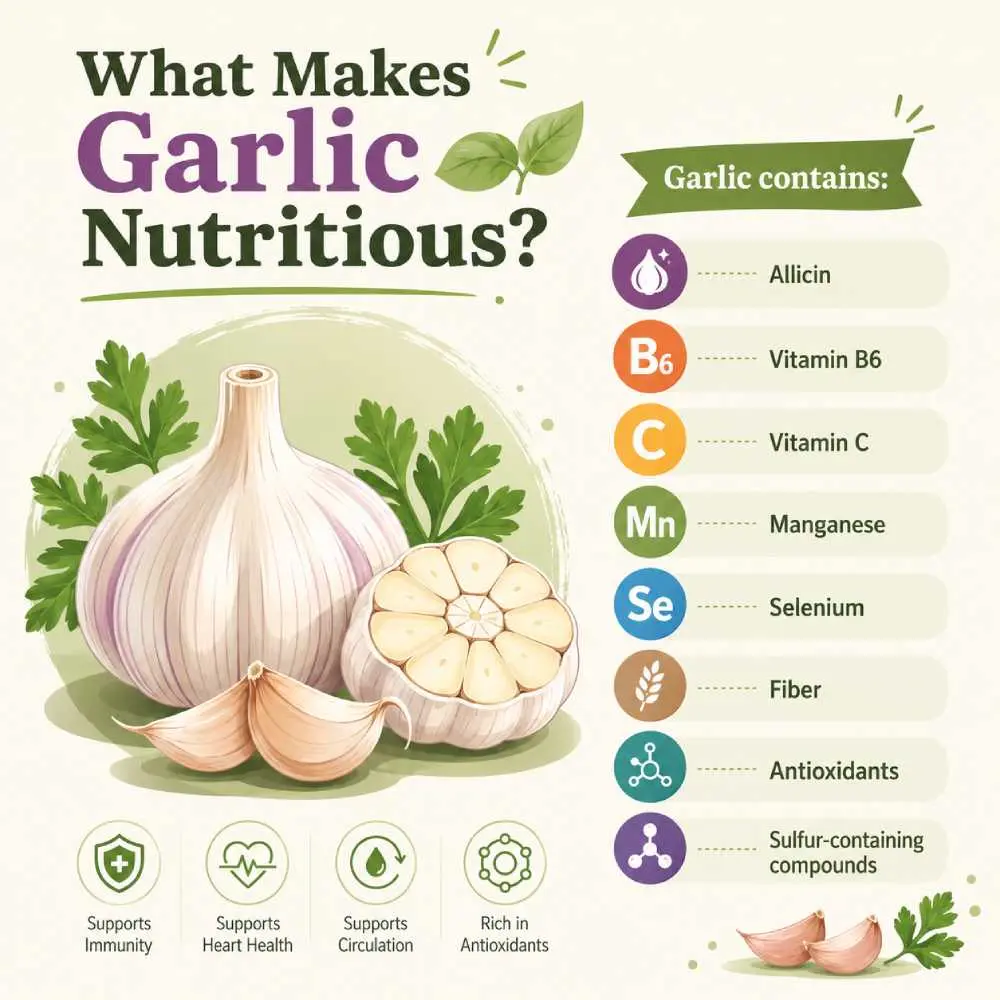
What Makes Garlic Nutritious?
Although garlic is typically consumed in small amounts, it contains several nutrients and bioactive compounds that contribute to its nutritional value.
Garlic contains:
- Allicin
- Vitamin B6
- Vitamin C
- Manganese
- Selenium
- Fiber
- Antioxidants
- Sulfur-containing compounds
Many of garlic's potential health benefits are linked to its sulfur compounds and antioxidant activity.
What Are the Benefits of Garlic?
Garlic is valued not only for its culinary uses but also for its nutritional profile. Its bioactive compounds, antioxidants, and naturally occurring sulfur compounds may contribute to various aspects of health and wellness.
When consumed as part of a balanced diet, garlic may help support cardiovascular health, immune function, and overall well-being.
May Support Heart Health
Garlic is one of the foods most commonly associated with cardiovascular wellness. Its sulfur-containing compounds and antioxidant properties may help support healthy blood vessel function and overall heart health.
As part of a heart-conscious lifestyle, garlic may contribute to long-term cardiovascular wellness.
May Help Support Healthy Blood Pressure Levels
Garlic has been studied for its potential role in supporting healthy blood pressure levels. Certain sulfur-containing compounds may help support normal blood vessel relaxation and circulation.
However, garlic should not be considered a substitute for prescribed medical treatment or professional healthcare recommendations.
May Help Support Healthy Cholesterol Levels
Garlic is often included in heart-healthy dietary patterns because of its potential role in supporting cholesterol balance.
Maintaining healthy cholesterol levels involves multiple lifestyle factors, including balanced nutrition, regular physical activity, and appropriate medical care when necessary.
May Support Immune Function
Garlic has long been associated with immune wellness. Its bioactive compounds and antioxidant properties may help support the body's natural defense mechanisms and overall immune function.
For this reason, garlic is frequently included in balanced dietary patterns focused on supporting general health.
May Provide Antioxidant Protection
Garlic contains antioxidants that may help protect cells from oxidative stress.
Oxidative stress occurs when there is an imbalance between free radicals and the body's antioxidant defenses. Antioxidant-rich foods are commonly included in healthy dietary patterns because they help support cellular health and overall wellness.
May Have Anti-Inflammatory Properties
Garlic contains compounds that may contribute to the body's natural inflammatory response.
Supporting a balanced inflammatory response is considered an important component of overall health, and foods rich in bioactive plant compounds are often included in wellness-focused diets.
May Support Healthy Aging
Garlic's antioxidant compounds have attracted attention in healthy aging discussions. Antioxidant-rich foods are commonly included in dietary patterns that support cellular health and overall wellness throughout life.
While no single food can prevent aging, garlic can be part of a nutrient-rich diet that supports long-term health.
Clinical Insight: Garlic and Cardiovascular Wellness
Garlic has been widely studied for its potential role in cardiovascular health. Its sulfur-containing compounds and antioxidant activity may contribute to healthy blood pressure regulation, cholesterol balance, and overall heart wellness. While garlic can be part of a heart-conscious diet, maintaining cardiovascular health also requires regular physical activity, balanced nutrition, and appropriate medical care when needed.
Raw Garlic vs. Cooked Garlic
Garlic can be consumed in both raw and cooked forms, each offering unique characteristics.
Raw Garlic
- Higher allicin availability
- Stronger flavor and aroma
- Commonly added to dressings and sauces
Cooked Garlic
- Milder taste
- Easier for some individuals to digest
- Frequently used in soups, sauces, and cooked meals
- Both forms can be included in a balanced diet.
Are There Any Side Effects of Garlic?
Garlic is generally considered safe for most people when consumed in moderation.
Possible considerations include:
- Garlic breath
- Digestive discomfort
- Heartburn
- Stomach irritation in some individuals
- Potential interactions with blood-thinning medications
Individuals taking medications or managing chronic medical conditions should consult a healthcare professional before using garlic supplements.
How Can You Add Garlic to Your Diet?
Garlic is a versatile ingredient that can easily be incorporated into everyday meals.
Popular ways to consume garlic include:
- Adding fresh garlic to salads
- Mixing garlic into sauces and dressings
- Using garlic in soups and stews
- Roasting garlic cloves
- Adding garlic to vegetable dishes
- Including garlic in marinades
Both raw and cooked garlic can contribute flavor and nutritional value to meals.
Which Department should I visit?
Individuals seeking nutritional guidance related to heart health, immune wellness, healthy aging, or balanced dietary planning may consult the Nutrition and Dietetics or Internal Diseases department.
