


 Let Us Call You


Early pregnancy symptoms can vary widely from person to person. A missed period, fatigue, breast tenderness, nausea, and frequent urination are among the most common early signs, but some people may notice very few changes at first.
In this article, you'll learn about the first signs of pregnancy, when symptoms may begin, how they can change during the first weeks, and when to take a pregnancy test.
Key Takeaways
- Early pregnancy symptoms vary between individuals.
- A missed period is one of the earliest signs of pregnancy when menstrual cycles are regular.
- Fatigue, breast tenderness, nausea, frequent urination, bloating, and smell sensitivity may occur during early pregnancy.
- Symptoms can overlap with premenstrual symptoms and other conditions.
- A pregnancy test is more reliable than symptoms alone for confirming pregnancy.
- Table Of Contents
- What Are the Early Signs of Pregnancy?
- When Do Early Pregnancy Symptoms Start?
- 15 Early Pregnancy Symptoms
- Early Pregnancy Symptoms by Week
- When Should You Take a Pregnancy Test?
- Can You Get Pregnant on Your Period?
- What Does Ovulating Meaning Refer To?
- Can You Have Pregnancy Symptoms Without Being Pregnant?
What Are the Early Signs of Pregnancy?
The signs of pregnancy can be different for everyone. Hormonal and physical changes that begin in early pregnancy may cause symptoms such as fatigue, breast tenderness, nausea, bloating, mood changes, or increased sensitivity to smells.
A missed period is one of the most recognizable early signs, especially for people with regular menstrual cycles. However, symptoms alone cannot confirm that you are pregnant.
Clinical Insight
Early pregnancy symptoms can vary considerably and may overlap with menstrual or other health-related symptoms. A pregnancy test provides a more reliable indication of pregnancy than symptoms alone, while medical evaluation is important after a positive result or when concerning symptoms occur.
When Do Early Pregnancy Symptoms Start?
There is no single timeline for early pregnancy symptoms. Some people notice changes around the time of a missed period, while others may not experience noticeable symptoms until later.
The timing of symptoms can also depend on when ovulation and conception occurred. Breast changes and nausea may appear around weeks 4 to 6, although symptoms vary considerably from one pregnancy to another.
15 Early Pregnancy Symptoms
Missed or Lighter Period
A missed period is one of the earliest signs of pregnancy for people who normally have regular cycles. Some may instead notice bleeding that is lighter than usual.
Implantation Bleeding and Cramping
Implantation bleeding may appear as light spotting in early pregnancy and can sometimes occur with mild cramping. These symptoms can be confused with the beginning of a period and do not occur in every pregnancy.
Fatigue
Feeling unusually tired is common during early pregnancy. Hormonal changes may contribute to increased sleepiness and reduced energy, particularly during the first trimester.
Breast Changes
Breasts may become tender, swollen, or more sensitive as hormone levels change. The nipples and areola may also look different during early pregnancy.
Nausea and Vomiting
Nausea, often called morning sickness, can occur at any time of day. It commonly begins around weeks 4 to 6, although some people experience it earlier or later.
Frequent Urination
Hormonal and circulatory changes can increase the need to urinate during early pregnancy. Some people may notice more frequent trips to the bathroom, including during the night.
Mood Changes
Changes in hormone levels can affect emotions. Some people may experience increased sensitivity, irritability, anxiety, or mood swings.
Bloating and Constipation
Hormonal changes may slow digestion and contribute to bloating or constipation. These symptoms can occur during the early weeks of pregnancy.
Increased Sensitivity to Smells
Some people become more sensitive to certain smells during early pregnancy. Strong odors may also contribute to nausea or food aversions.
Food Cravings and Aversions
Changes in taste and smell may affect food preferences. You may develop new cravings or lose interest in foods and drinks you previously enjoyed.
Headaches and Dizziness
Headaches and dizziness may occur during early pregnancy, although they can also have many other causes. These symptoms should not be used alone to determine whether pregnancy has occurred.
Changes in Body Temperature
Some people may notice changes in basal body temperature during early pregnancy. Temperature patterns can vary and are not enough to confirm pregnancy on their own.
Increased Heart Rate
Hormonal and circulatory changes may affect heart rate during pregnancy. Some people may notice a stronger or faster heartbeat.
Heartburn
Hormonal changes can affect digestion and may contribute to heartburn during pregnancy.
Skin Changes
Changes in hormone levels may affect the skin. Some people notice increased oiliness, acne, or changes in the appearance of their skin.
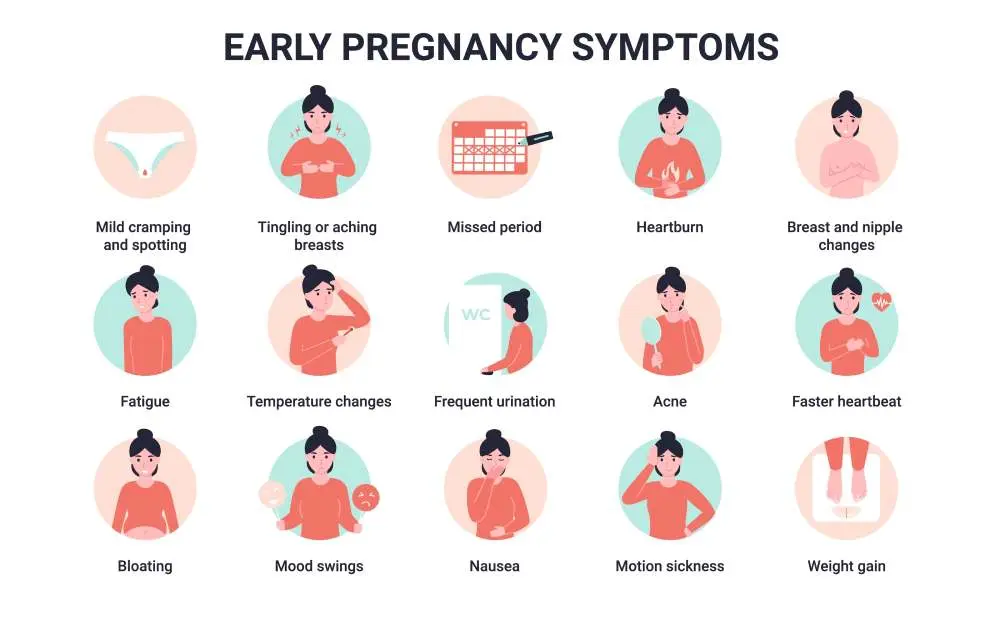
Early Pregnancy Symptoms by Week
Pregnancy is usually dated from the first day of the last menstrual period. This means that the first weeks of pregnancy are counted before conception may actually occur, which can make the timing of symptoms confusing.
Around weeks 4 to 6, some people may notice a missed period, breast tenderness, fatigue, light spotting, cramping, frequent urination, or nausea. As pregnancy progresses, symptoms may change or become more noticeable.
The absence of symptoms does not necessarily mean that you are not pregnant. Every pregnancy can develop differently.
When Should You Take a Pregnancy Test?
Symptoms can provide clues, but a pregnancy test is a more reliable way to determine whether pregnancy has occurred. Home pregnancy tests can generally be used around the time of a missed period, although testing later may reduce the chance of a false-negative result.
Once pregnancy is confirmed, a pregnancy calculator or due date calculator can be used to estimate the expected delivery date. Your healthcare provider may later adjust the estimated date based on clinical findings and ultrasound.
Can You Get Pregnant on Your Period?
Can you get pregnant on your period is a common question, and pregnancy is possible even when intercourse occurs during menstruation. Sperm can survive for several days, and the timing of ovulation can vary between menstrual cycles.
What Does Ovulating Meaning Refer To?
The search phrase “ovulating meaning” generally refers to asking what ovulation means. Ovulation is the release of an egg from an ovary and usually occurs once during a menstrual cycle. Understanding your cycle can help explain when conception is most likely, although cycle timing is not always predictable.
Can You Have Pregnancy Symptoms Without Being Pregnant?
Yes. You can experience symptoms that resemble early pregnancy even when you are not pregnant. Fatigue, breast tenderness, bloating, headaches, mood changes, and nausea can also occur with premenstrual syndrome or other health conditions. For this reason, symptoms should not be used alone to confirm pregnancy.
When should you see a doctor?
A positive pregnancy test is a reason to arrange medical care and begin appropriate prenatal follow-up. You should also seek medical advice for significant bleeding, severe abdominal or pelvic pain, severe vomiting, sudden shortness of breath, or severe headaches.
Later in pregnancy, symptoms such as severe headache, vision changes, significant swelling, or high blood pressure may require evaluation for conditions such as preeclampsia.
Fever, painful urination, or pain in the back or side may also indicate a kidney infection and should be evaluated during pregnancy. Common kidney infection symptoms include fever, nausea, back or side pain, and painful urination. A kidney infection during pregnancy, also known as pyelonephritis, requires prompt medical evaluation.
Braxton Hicks contractions are irregular uterine tightenings that can occur later in pregnancy and are different from the regular contractions associated with labor.
Which department should I visit?
If you think you may be pregnant or have questions about early pregnancy symptoms, you may consult the Obstetrics and Gynecology department. Your healthcare provider can confirm pregnancy, evaluate symptoms, and provide appropriate prenatal care to support a healthy pregnancy.
References
- Healthline — https://www.healthline.com/
- NHS — https://www.nhs.uk/
- American College of Obstetricians and Gynecologists (ACOG) — https://www.acog.org/
