


 Let Us Call You


Gout is a common type of inflammatory arthritis that can cause sudden and intense joint pain. It often develops quickly, sometimes overnight, and can significantly affect daily activities. Although it most commonly affects the big toe, gout can also occur in other joints. The condition is linked to high levels of uric acid in the body. Understanding gout is important for early treatment and preventing long-term joint damage.
Key Takeaways
- Gout is a form of arthritis caused by a buildup of uric acid crystals in the joints.
- It often leads to sudden and severe joint pain, especially in the big toe.
- Treatment focuses on managing pain and reducing uric acid levels to prevent future attacks.
What is Gout?
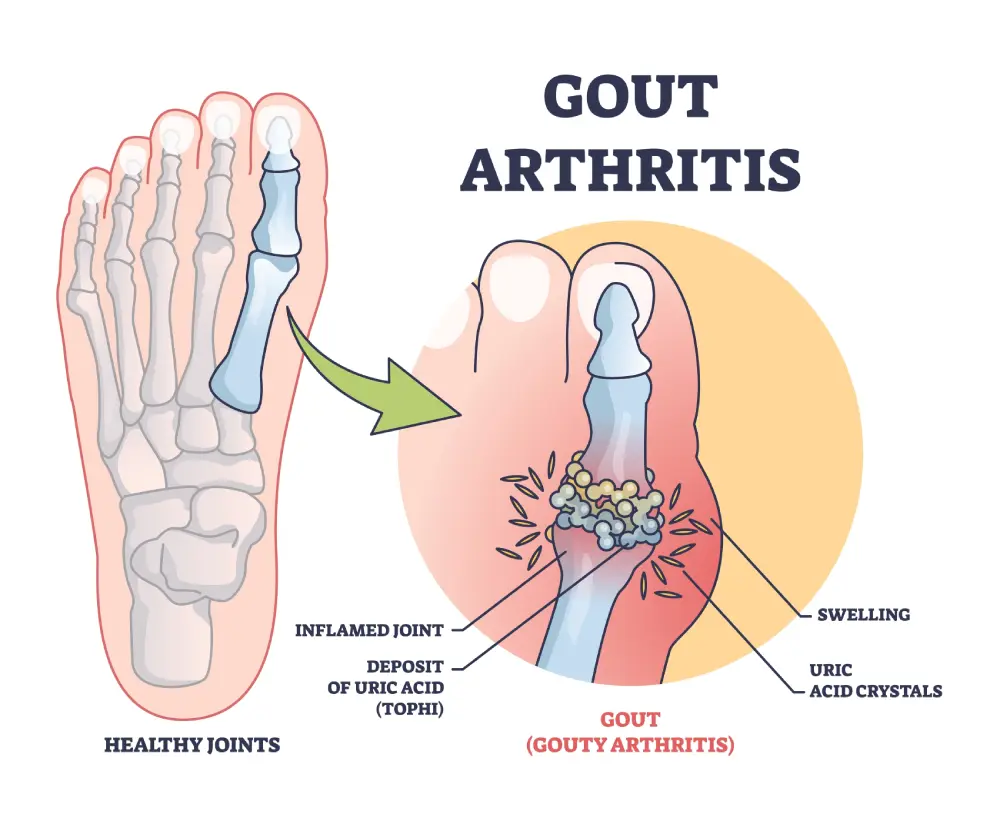
Gout is a type of arthritis that occurs when uric acid builds up in the body and forms sharp crystals in the joints. These crystals trigger inflammation, leading to pain, swelling, and redness. The condition usually affects one joint at a time, most commonly the big toe. In some cases, repeated attacks can lead to joint damage if not properly managed.
What are the Symptoms of Gout?
Gout symptoms typically appear suddenly and can be severe, often waking individuals during the night. These episodes, known as gout attacks, may last for several days or weeks. Symptoms can limit movement and affect quality of life during flare-ups.
Common symptoms include:
- Sudden and severe joint pain
- Swelling and inflammation
- Redness and warmth in the affected joint
- Limited range of motion
- Tenderness, even with light touch
What Causes Gout?
Gout is caused by high levels of uric acid in the blood, a condition known as hyperuricemia. Uric acid forms when the body breaks down substances called purines, which are found naturally in the body and in certain foods. When uric acid builds up, it can form crystals in the joints. This buildup may occur if the body produces too much uric acid or does not eliminate enough of it through the kidneys.
What are the Risk Factors for Gout?
Several factors can increase the risk of developing gout, often related to lifestyle, diet, and underlying health conditions. Recognizing these risk factors can help with prevention and early management. Some risk factors are modifiable, meaning lifestyle changes can reduce risk.
Risk factors include:
- A diet high in red meat and seafood
- Alcohol consumption
- Obesity
- Family history
- Age and gender
- Certain medical conditions
What are the Complications of This Condition?
If gout is not treated properly, it can lead to long-term complications. Repeated gout attacks may damage joints and surrounding tissues. Chronic gout can significantly impact mobility and quality of life.
Possible complications include:
- Joint damage
- Chronic gout
- Kidney stones
- Reduced joint function
How is Gout Diagnosed?
Gout is diagnosed through a combination of clinical evaluation and laboratory tests. Doctors may examine symptoms and confirm the presence of uric acid crystals. Accurate diagnosis helps distinguish gout from other types of arthritis.
Diagnostic methods include:
- Joint fluid analysis
- Blood tests for uric acid levels
- Imaging tests
What’s the Treatment for Gout?
Treatment for gout focuses on relieving pain during attacks and preventing future flare-ups. This often involves medication and lifestyle changes. Long-term management aims to control uric acid levels and reduce recurrence.
Treatment options include:
- Anti-inflammatory medications
- Pain relief medications
- Drugs to lower uric acid levels
- Dietary changes
- Hydration and lifestyle adjustments
Can Gout Be Prevented?
Gout can often be managed and prevented through healthy lifestyle habits. Reducing risk factors can help lower uric acid levels and prevent attacks. Preventive strategies are especially important for people with recurrent gout.
Prevention tips include:
- Maintain a healthy weight
- Limit alcohol intake
- Follow a balanced diet
- Stay hydrated
- Avoid high-purine foods
Which department should I visit?
Patients with gout symptoms should consult the Rheumatology or Internal Diseases department. Early diagnosis and management can help prevent complications and improve quality of life.


