


 Let Us Call You


Tuberculosis (TB) is a serious infectious disease that primarily affects the lungs, although it can also involve other organs. It remains a global health concern and can spread from person to person through the air. Not everyone infected with TB becomes ill, as some individuals carry the bacteria without developing symptoms. However, active tuberculosis can lead to significant health complications if left untreated. Understanding TB is essential for early diagnosis, prevention, and effective treatment.
Key Takeaways
- Tuberculosis is a bacterial infection that mainly affects the lungs but can spread to other parts of the body.
- It spreads through the air when an infected person coughs, sneezes, or speaks.
- Early diagnosis and appropriate antibiotic treatment are essential to control the disease and prevent complications.
- Table Of Contents
- What is Tuberculosis?
- What are Tuberculosis Symptoms?
- How is Tuberculosis Transmitted?
- What Causes Tuberculosis?
- What are the Risk Factors for Tuberculosis?
- What are the Complications of This Condition?
- How is Tuberculosis Diagnosed?
- What’s the Treatment for Tuberculosis?
- Can Tuberculosis Be Prevented?
What is Tuberculosis?
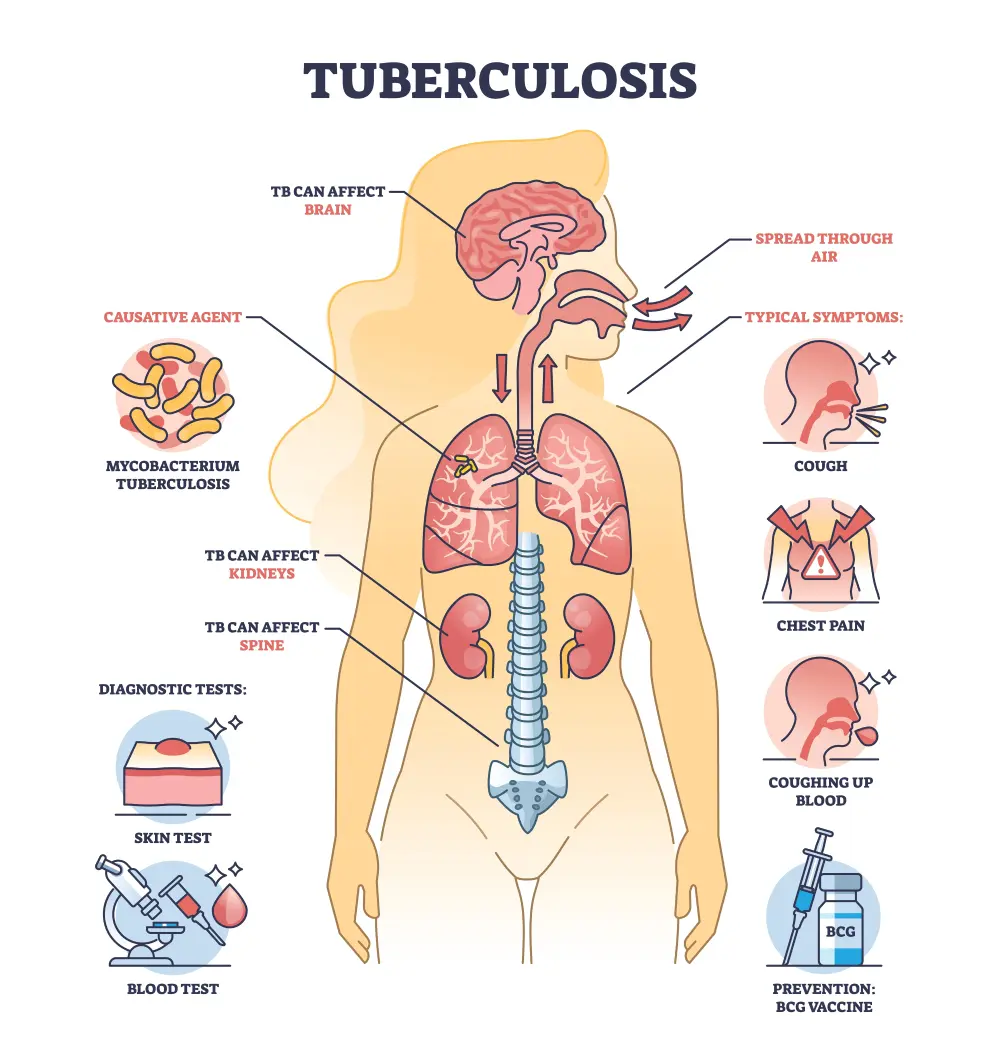
Tuberculosis is a bacterial infection caused by Mycobacterium tuberculosis. It most commonly affects the lungs but can also spread to areas such as the brain, kidneys, or spine. The disease exists in two forms: latent (inactive) TB and active TB. Latent TB does not cause symptoms and is not contagious, but it can become active over time.
What are the types of tuberculosis?
Tuberculosis is classified based on how it behaves in the body. Understanding these types helps guide diagnosis and treatment decisions.
Types include:
- Latent TB (inactive TB): The bacteria remain in the body without causing symptoms and cannot be transmitted to others.
- Active TB disease: The bacteria multiply, cause symptoms, and can spread to others.
- Pulmonary TB: Affects the lungs and is the most common form.
- Extrapulmonary TB: Affects organs other than the lungs, such as the brain, spine, or kidneys.
What are Tuberculosis Symptoms?
Symptoms of tuberculosis depend on whether the infection is active and which part of the body is affected. Active TB symptoms often develop gradually and can worsen over time. Latent TB does not cause symptoms but may be detected through testing.
Common symptoms include:
- Persistent cough lasting more than 2–3 weeks
- Chest pain
- Coughing up blood or mucus
- Fatigue and weakness
- Weight loss
- Fever
- Night sweats
How is Tuberculosis Transmitted?
Tuberculosis spreads through the air when a person with active TB releases bacteria into the environment. This can happen through coughing, sneezing, or even speaking. People who inhale these airborne bacteria may become infected.
Transmission occurs through:
- Close contact with an infected person
- Inhaling airborne droplets
- Prolonged exposure in enclosed spaces
- Latent TB does not spread to others, while active TB is contagious.
What Causes Tuberculosis?
Tuberculosis is caused by the bacterium Mycobacterium tuberculosis. Infection occurs when the bacteria enter the body and begin to multiply, usually in the lungs. The immune system may contain the infection or allow it to progress into active disease.
What are the Risk Factors for Tuberculosis?
Certain factors increase the likelihood of developing active tuberculosis. These risks are often linked to immune system health and environmental exposure. People with weakened immunity are at higher risk of developing active TB.
Risk factors include:
- Weakened immune system
- Close contact with infected individuals
- Living in crowded or high-risk environments
- Malnutrition
- Chronic medical conditions
What are the Complications of This Condition?
If tuberculosis is not treated, it can lead to serious complications affecting different organs. The infection may spread beyond the lungs and become life-threatening. Severe cases can result in long-term damage or death.
Possible complications include:
- Lung damage
- Spread of infection to other organs
- Respiratory failure
How is Tuberculosis Diagnosed?
Tuberculosis is diagnosed using a combination of clinical evaluation and laboratory tests. Early diagnosis is important to prevent transmission and complications. Testing helps distinguish between latent and active TB.
Diagnostic methods include:
- Tuberculin skin test (TST)
- Blood tests
- Chest X-ray
- Sputum tests
What’s the Treatment for Tuberculosis?
Tuberculosis is treated with a course of antibiotics over several months. Treatment differs depending on whether the infection is latent or active. Completing the full course of treatment is essential to prevent drug resistance.
Treatment options include:
- Antibiotic therapy
- Monitoring for treatment response
- Supportive care
Can Tuberculosis Be Prevented?
Tuberculosis prevention focuses on reducing exposure and early detection. Vaccination and screening programs play an important role in controlling the spread of the disease. Preventive strategies are especially important in high-risk populations.
Prevention tips include:
- Early testing and screening
- Avoid close contact with infected individuals
- Use protective measures in high-risk settings
- Vaccination
Which department should I visit?
Patients with tuberculosis symptoms should consult the Infectious Diseases or Pulmonology department. Early medical evaluation is essential to begin treatment and prevent transmission.


