


 Let Us Call You


Olive oil is a staple of the Mediterranean diet and has been consumed for centuries as part of traditional eating patterns. It is widely recognized for its nutritional value and is commonly included in heart-conscious and wellness-focused diets.
Produced from olives, olive oil contains healthy fats, antioxidants, and plant compounds that contribute to its unique nutritional profile. Because of these components, olive oil is often associated with cardiovascular wellness, healthy aging, and overall well-being.
Key Takeaways
- Olive oil is rich in monounsaturated fats and antioxidants.
- It is a key component of the Mediterranean diet.
- Olive oil may support heart health and overall wellness when used as part of a balanced diet.
- Extra virgin olive oil contains naturally occurring plant compounds and antioxidants.
- Olive oil can be incorporated into a variety of meals and dietary patterns.
What Makes Olive Oil Nutritious?
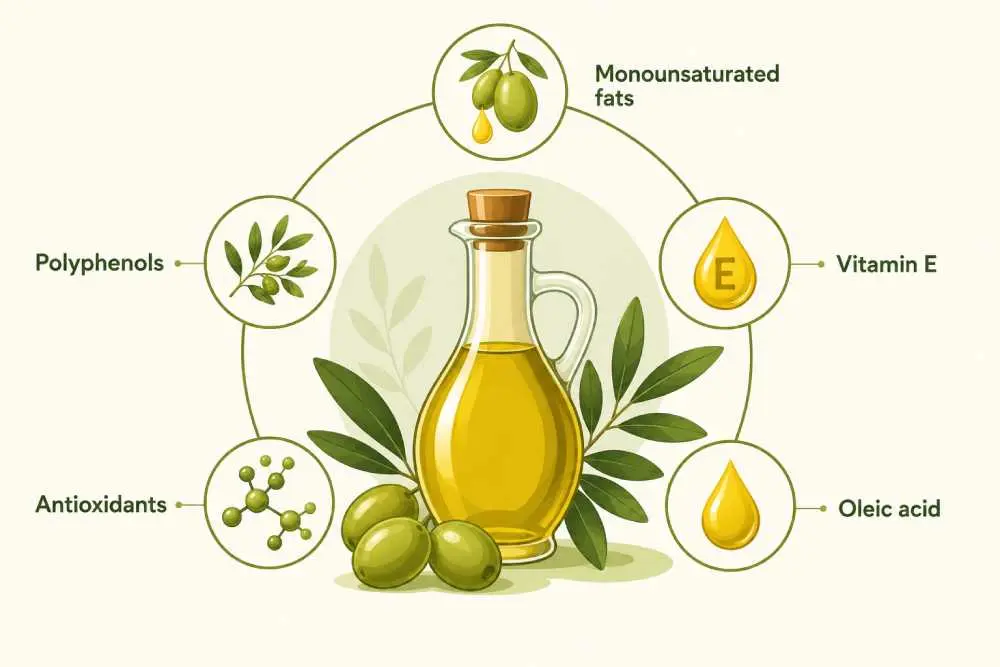
Olive oil contains several nutrients and bioactive compounds that contribute to its nutritional value.
These include:
- Monounsaturated fats
- Polyphenols
- Vitamin E
- Antioxidants
- Oleic acid
Monounsaturated fats make up the majority of the fat content in olive oil and are commonly associated with heart-conscious dietary patterns.
What Are the Benefits of Olive Oil?
Olive oil is valued for more than its culinary uses. Its healthy fats and naturally occurring antioxidants contribute to its role in balanced nutrition and wellness-focused eating habits.
When consumed as part of a healthy dietary pattern, olive oil may support cardiovascular wellness, healthy aging, and overall health.
May Support Heart Health
Olive oil is frequently included in dietary patterns associated with cardiovascular wellness. Its monounsaturated fat content makes it a popular alternative to sources of saturated fat. Heart-conscious eating plans often emphasize healthy fats alongside fruits, vegetables, whole grains, legumes, and lean protein sources.
May Provide Antioxidant Protection
Extra virgin olive oil contains antioxidants and plant compounds known as polyphenols. Antioxidants help protect cells from oxidative stress caused by free radicals. Antioxidant-rich foods are commonly included in dietary patterns that support long-term wellness and healthy aging.
May Support Healthy Aging
Nutrition plays an important role in healthy aging, and olive oil is often included in longevity-focused dietary patterns. Because it provides healthy fats and antioxidant compounds, olive oil is commonly incorporated into balanced diets that emphasize overall wellness throughout life.
May Support Brain Health
Healthy fats are important components of balanced nutrition and overall wellness. Olive oil is often included in dietary patterns that support cognitive wellness and healthy aging due to its nutritional profile and role within Mediterranean-style eating habits.
May Support Overall Wellness
Olive oil can contribute to a balanced dietary pattern by providing healthy fats and naturally occurring plant compounds. Combined with regular physical activity, quality sleep, and balanced nutrition, olive oil can be part of an overall wellness-focused lifestyle.
Extra Virgin Olive Oil vs. Regular Olive Oil
Not all olive oils undergo the same processing methods.
Extra Virgin Olive Oil
- Minimally processed
- Rich in polyphenols
- Distinct flavor and aroma
- Commonly used in salads and dressings
Regular Olive Oil
- More refined
- Milder flavor
- Suitable for various cooking methods
Both types can be included in a balanced diet, although extra virgin olive oil generally contains higher levels of naturally occurring antioxidants.
Clinical Insight: Olive Oil and the Mediterranean Diet
Olive oil is one of the defining components of the Mediterranean diet, a dietary pattern widely recognized for its emphasis on fruits, vegetables, legumes, whole grains, nuts, and healthy fats
The combination of these foods, rather than any single ingredient, contributes to the overall nutritional value of this eating pattern. Olive oil is commonly used as the primary source of added fat within Mediterranean-style diets.
Are There Any Side Effects of Olive Oil?
Olive oil is generally considered safe for most people when consumed as part of a balanced diet
Important considerations include:
- Olive oil is calorie-dense and should be consumed in moderation.
- Individual dietary needs may vary.
- Overall dietary balance remains important.
Using olive oil as part of a varied eating pattern can help support nutritional goals.
How Can You Add Olive Oil to Your Diet?
Olive oil can easily be incorporated into everyday meals
Popular uses include:
- Salad dressings
- Vegetable dishes
- Marinades
- Whole-grain meals
- Soups
- Mediterranean-inspired recipes
Replacing less healthy fat sources with olive oil may help support a balanced dietary pattern.
Which department should I visit?
Individuals seeking nutritional guidance related to heart health, healthy aging, wellness-focused nutrition, or balanced dietary planning may consult the Nutrition and Dietetics or Internal Diseases department.