


 Let Us Call You


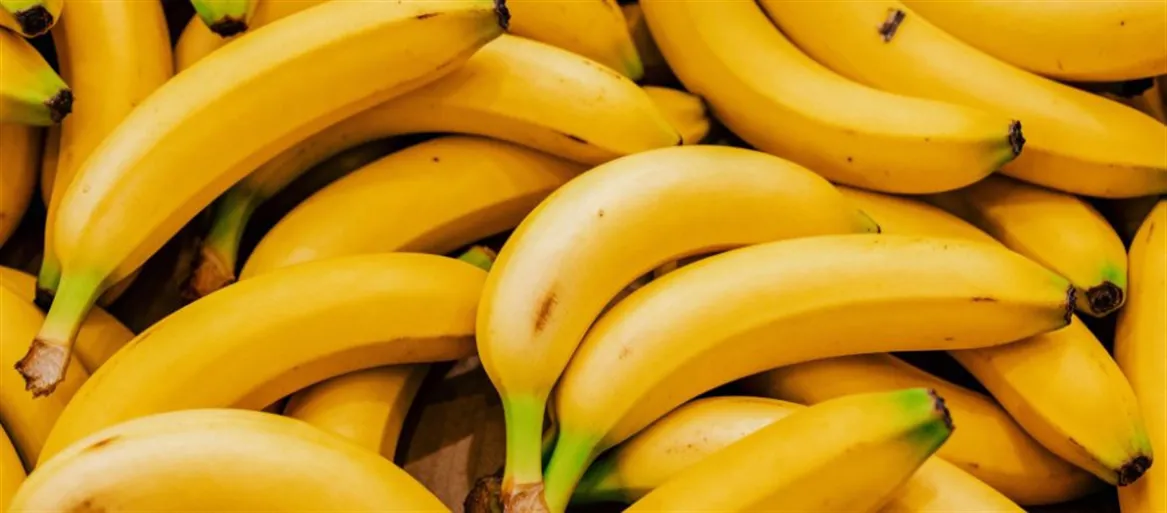
A medium banana, about 18-20 cm long and around 118 g without the peel, contains about 105 calories. Bananas have roughly 89 calories per 100 g, so the total depends mainly on size. Almost all of that energy comes from carbohydrate, and a banana has very little fat or protein. One banana counts as one of your 5 A Day portions of fruit and vegetables and also gives you fibre, potassium and vitamin B6.
Key Takeaways
- A small banana has about 90 calories, a medium banana about 105 and a large banana about 121.
- Around 93% of a banana's calories come from carbohydrate, mostly natural sugars and starch.
- A medium banana provides about 3 g of fibre and 422 mg of potassium.
- Ripeness changes how sweet a banana tastes, not how many calories it contains.
How Many Calories Are in a Banana by Size?
Calories in a banana rise with its size. The figures below are for the edible part of a raw banana and come from US Department of Agriculture (USDA) data.
- Extra small (under 15 cm, about 81 g): 72 calories
- Small (15-18 cm, about 101 g): 90 calories
- Medium (18-20 cm, about 118 g): 105 calories
- Large (20-23 cm, about 136 g): 121 calories
- Extra large (over 23 cm, about 152 g): 135 calories
- Per 100 g: 89 calories
If you track your intake closely, weigh the banana after peeling it. Length is only a rough guide.
What Nutrients Are in a Banana?
The nutrients in a banana are mostly water and carbohydrate, with small amounts of several vitamins and minerals. A medium banana (118 g) provides approximately:
- Energy: 105 calories
- Carbohydrate: 27 g, including about 14 g of natural sugars
- Fibre: 3.1 g
- Protein: 1.3 g
- Fat: 0.4 g
- Potassium: 422 mg
- Vitamin B6: 0.4 mg
- Vitamin C: 10 mg
- Magnesium: 32 mg
Carbohydrate
Carbohydrate supplies almost all of a banana's energy. In greener bananas much of it is starch, including resistant starch, which acts more like fibre in the gut. As the banana ripens, this starch slowly turns into sugar.
Potassium
Potassium helps nerves and muscles work normally, including the heart muscle. A medium banana gives an adult around a tenth of the potassium they need each day, which is one reason bananas often appear on lists of fruits and vegetables for heart health.
Vitamin B6
Vitamin B6 helps the body use energy from food and make red blood cells. A medium banana covers about a third of an adult's daily need.
Do Ripe Bananas Have More Calories?
Ripe bananas do not have more calories than less ripe bananas of the same weight. Ripening changes the type of carbohydrate, not the amount of energy. As starch breaks down into sugars, the banana tastes sweeter and becomes softer.
Are Bananas Good for You?
Bananas are good for you as part of a balanced diet. They are low in fat, easy to carry and provide fibre and potassium. Eating a mix of fruit and vegetables still gives you a wider range of nutrients than relying on one type.
Bananas and your 5 A Day
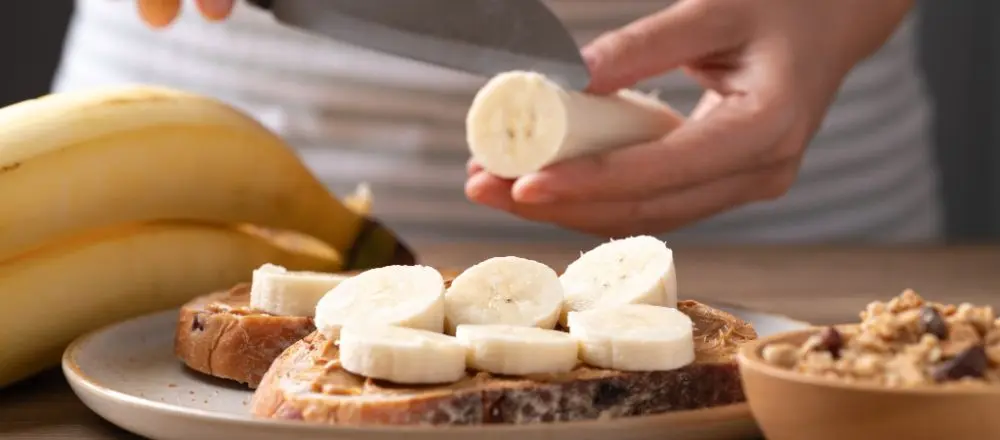
One medium banana counts as one portion of your 5 A Day. Sliced banana is easy to add to breakfast cereal, porridge or yoghurt.
Bananas and blood sugar
People with diabetes can eat bananas, but because bananas contain natural sugars, it helps to count them as part of the day's carbohydrate intake. Eating a banana with some protein, such as yoghurt or a handful of nuts, can slow down how quickly the sugar is absorbed.
Bananas and weight
At about 100 calories, a banana is a filling snack. Body weight depends on your overall diet and activity rather than on any single food, so bananas can fit into a plan to lose weight or maintain a healthy weight.
How Do Banana Products Compare?
Banana products often have more calories than fresh banana, mainly because water has been removed or fat and sugar have been added.
- Banana chips are usually fried and sometimes sweetened, so they contain far more calories per gram than fresh banana.
- Dried banana has more sugar and calories per gram because the water has been removed.
- Banana bread and muffins often contain added butter, oil and sugar.
- A smoothie made with one banana and milk or yoghurt adds the calories of those ingredients.
Who Should Be Careful With Bananas?
People who have been told to limit potassium and people with a banana allergy should be careful with bananas. Most others can eat them without any problems. Groups that may need extra care include:
- People with advanced kidney disease who have been advised to limit potassium
- People taking medicines that raise potassium levels, if their doctor has recommended a low-potassium diet
- People with a banana allergy, which can be linked to latex allergy
If you have a condition that affects what you can eat, such as kidney disease or diabetes, it is worth getting advice from a nutrition and diet specialist.