


 Let Us Call You


Magnesium deficiency, also known as hypomagnesemia, occurs when the body does not have enough magnesium to function properly. Magnesium is essential for many biological processes, including muscle function, nerve signaling, and energy production. Low magnesium levels often go unnoticed in early stages because symptoms can be subtle. However, untreated magnesium deficiency may lead to serious health issues over time. Recognizing the signs early and starting appropriate treatment can help prevent complications and improve overall health.
- Table Of Contents
- Key Takeaways About Magnesium Deficiency
- What is Magnesium Deficiency?
- What are Magnesium Deficiency Symptoms?
- What Causes Magnesium Deficiency?
- What are the Risk Factors for Magnesium Deficiency?
- What are the Complications of This Condition?
- How is Magnesium Deficiency Diagnosed?
- What’s the Treatment for Magnesium Deficiency?
- Can Magnesium Deficiency Be Prevented?
Key Takeaways About Magnesium Deficiency
- Magnesium deficiency can cause symptoms like muscle cramps, fatigue, and irregular heartbeat.
- It is often linked to poor diet, chronic conditions, or low absorption in the body.
- Increasing magnesium intake through food or supplements can help restore healthy levels.
What is Magnesium Deficiency?
Magnesium deficiency is a condition in which the body lacks sufficient magnesium to support normal physiological functions. This mineral plays a critical role in maintaining muscle and nerve function, regulating blood pressure, and supporting bone health. In many cases, symptoms do not appear until magnesium levels become significantly low. Because of this, magnesium deficiency is often underdiagnosed. Early identification is important for effective management and prevention of complications.
What are Magnesium Deficiency Symptoms?
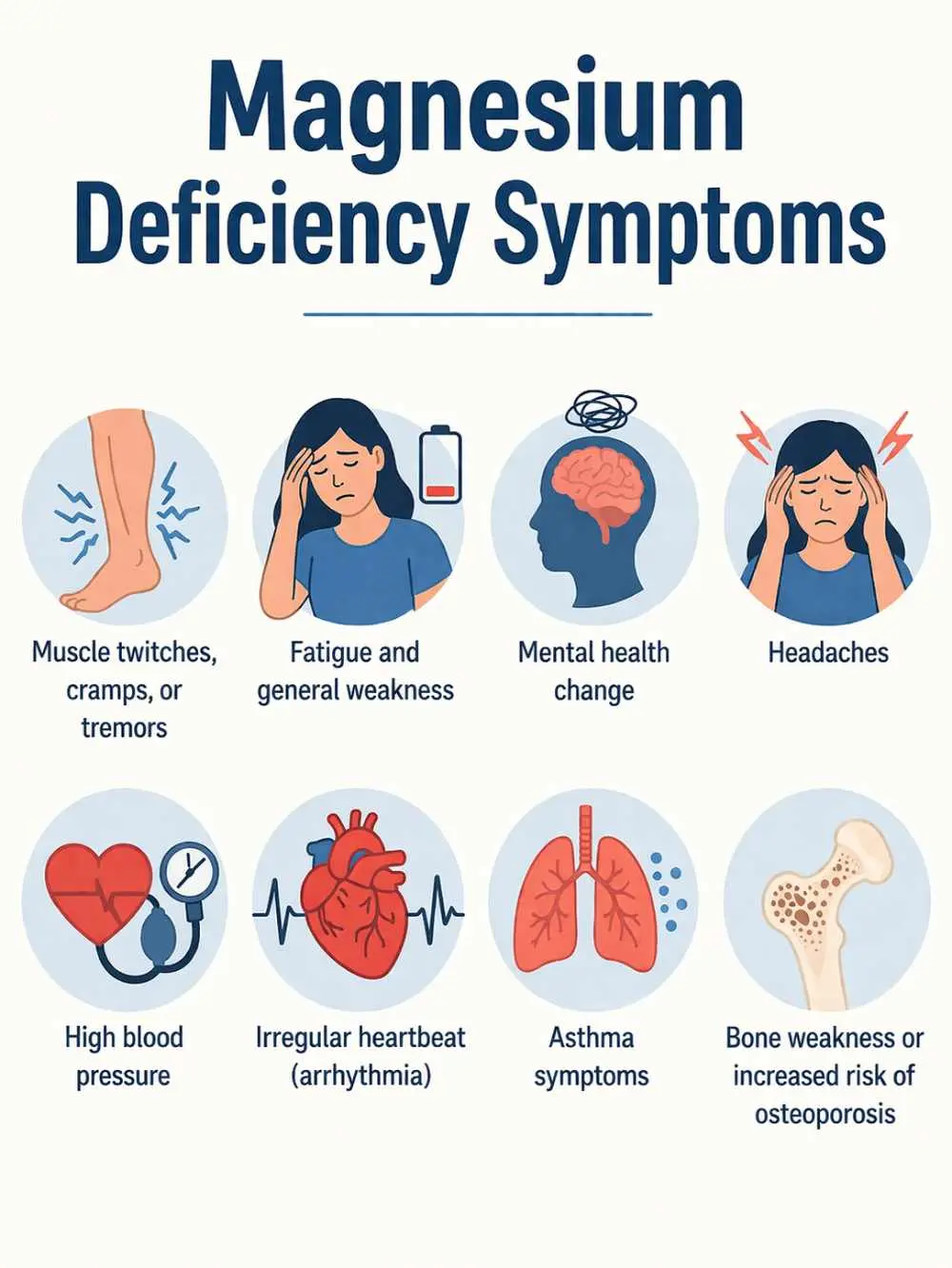
Magnesium deficiency symptoms can affect multiple systems in the body, including muscles, the nervous system, and the heart. In many cases, symptoms develop gradually and may be mistaken for other conditions. As magnesium levels drop further, symptoms can become more noticeable and severe. Recognizing these symptoms is essential for timely diagnosis and treatment.
Common symptoms include:
- Muscle twitches, cramps, or tremors
- Fatigue and general weakness
- Mental health change
- Headaches
- High blood pressure
- Irregular heartbeat (arrhythmia)
- Asthma symptoms
- Bone weakness or increased risk of osteoporosis
What Causes Magnesium Deficiency?
Magnesium deficiency can result from inadequate intake, increased loss, or poor absorption of magnesium in the body. Modern diets that are high in processed foods may lack sufficient magnesium. Certain medical conditions and lifestyle factors can also contribute to low magnesium levels. Identifying the underlying cause is essential for effective treatment.
Common causes include:
- Low dietary intake of magnesium
- Diets high in processed or refined foods
- Chronic alcohol use
- Gastrointestinal disorders affecting absorption
- Certain medications
- Conditions causing nutrient loss
What are the Risk Factors for Magnesium Deficiency?
Some individuals are more likely to develop magnesium deficiency due to underlying health conditions or lifestyle factors. These risk factors can increase magnesium loss or reduce its absorption in the body. Understanding these risks helps in prevention and early intervention. People with chronic conditions are especially vulnerable.
Risk factors include:
- Diabetes
- Chronic diarrhea
- Digestive disorders
- Alcohol use disorder
- Poor dietary habits
- Long-term medication use
What are the Complications of This Condition?
If left untreated, magnesium deficiency can lead to serious health complications. These complications may affect the cardiovascular, skeletal, and nervous systems. Severe deficiency can significantly impact quality of life and overall health. Early treatment reduces the risk of long-term damage.
Possible complications include:
- Osteoporosis
- Chronic fatigue
- High blood pressure
- Heart rhythm disorders
- Neuromuscular issues
- Increased risk of chronic diseases
How is Magnesium Deficiency Diagnosed?
Diagnosing magnesium deficiency typically involves evaluating symptoms and measuring magnesium levels in the body. However, diagnosis can be challenging because blood levels may not always reflect total body magnesium. Healthcare providers consider both clinical symptoms and test results. Early diagnosis helps guide effective treatment.
Diagnostic methods include:
- Blood tests to measure magnesium levels
- Evaluation of symptoms
- Medical history review
- Assessment of dietary intake
What’s the Treatment for Magnesium Deficiency?
Treatment for magnesium deficiency focuses on restoring normal magnesium levels in the body. This is usually achieved through dietary changes and, if necessary, supplementation. The treatment plan depends on the severity of the deficiency and underlying causes. Proper management can quickly improve symptoms.
Treatment options include:
- Increasing intake of magnesium-rich foods
- Oral magnesium supplements
- Addressing underlying health conditions
- Monitoring magnesium levels
- Adjusting medications if necessary
Can Magnesium Deficiency Be Prevented?
Magnesium deficiency can often be prevented through a balanced diet and healthy lifestyle habits. Regular intake of magnesium-rich foods supports optimal levels in the body. Preventive strategies are especially important for individuals at higher risk. Maintaining adequate magnesium levels supports overall health.
Prevention tips include:
- Eat leafy green vegetables
- Consume nuts and seeds
- Include whole grains and legumes in your diet
- Limit processed foods
- Monitor health conditions that affect absorption
Which department should I visit?
Patients with symptoms of magnesium deficiency should consult the Internal Diseases department. Specialists can evaluate symptoms and recommend appropriate treatment based on individual needs.