


 Let Us Call You


The brain relies on a continuous supply of nutrients to support memory, concentration, learning, and overall cognitive function. Just like other organs in the body, the brain requires a balanced diet to function effectively throughout life.
Certain foods contain nutrients that help support brain health, including omega-3 fatty acids, antioxidants, vitamins, and minerals. These nutrients contribute to normal brain function and may help support cognitive wellness as part of a healthy lifestyle.
While no single food can prevent cognitive decline or neurological conditions, a balanced dietary pattern rich in nutrient-dense foods may contribute to long-term brain health and overall well-being.
Key Takeaways
- Nutrition plays an important role in brain health and cognitive function.
- Fatty fish, berries, nuts, and leafy green vegetables are among the most commonly recommended foods for brain health.
- Omega-3 fatty acids, antioxidants, vitamins, and minerals support normal brain function.
- A balanced diet may contribute to memory, concentration, and cognitive wellness.
- Brain-friendly eating patterns are often included in healthy aging and longevity-focused lifestyles.
What is the Connection Between Nutrition and Brain Health?
The brain requires energy and nutrients to maintain normal function. Certain nutrients support communication between brain cells, protect against oxidative stress, and contribute to overall neurological health.
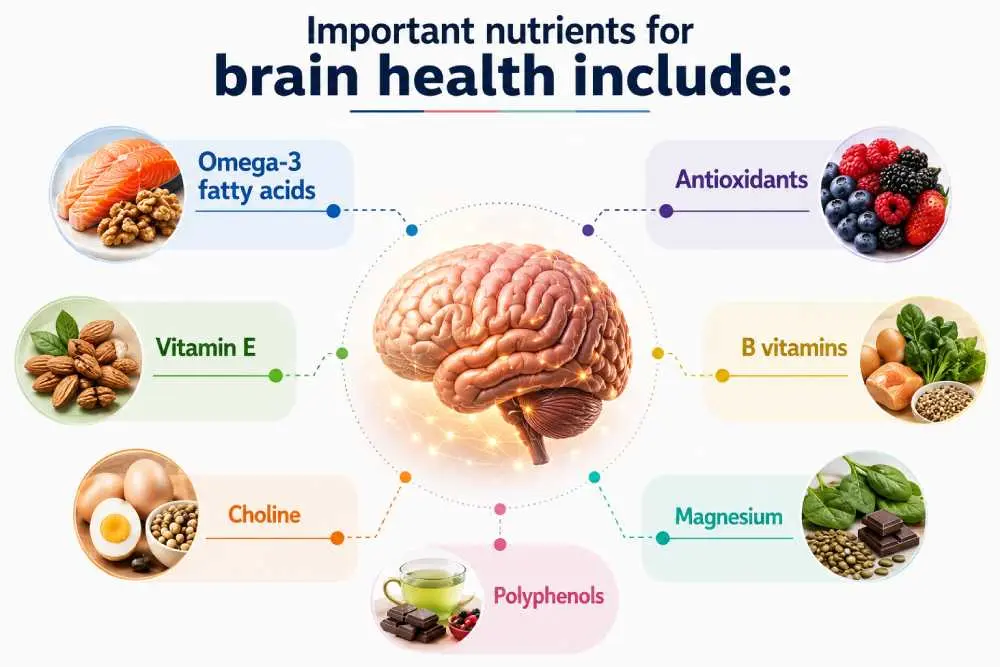
Important nutrients for brain health include:
- Omega-3 fatty acids
- Antioxidants
- Vitamin E
- B vitamins
- Choline
- Magnesium
- Polyphenols
Consuming a variety of nutrient-rich foods may help support cognitive wellness throughout different stages of life.
Clinical Insight: Nutrition and Cognitive Wellness
Nutrition is considered an important component of overall brain health. Dietary patterns rich in vegetables, fruits, whole grains, healthy fats, and lean proteins are frequently associated with cognitive wellness and healthy aging.
Rather than focusing on a single food, healthcare professionals generally recommend a varied and balanced diet that provides a wide range of nutrients necessary for normal brain function.
What Are the Best Foods for Brain Health?
Many foods contain nutrients that contribute to brain function and overall cognitive wellness.
Fatty Fish
Fatty fish are among the most well-known foods for brain health because they provide omega-3 fatty acids.
Examples include:
- Salmon
- Sardines
- Mackerel
- Trout
Omega-3 fatty acids contribute to normal brain structure and function and are commonly included in brain-healthy dietary patterns.
Leafy Green Vegetables
Leafy greens provide vitamins, minerals, and antioxidants that support overall health.
Examples include:
- Spinach
- Kale
- Swiss chard
- Arugula
These vegetables contain nutrients such as vitamin K, folate, and antioxidants that contribute to overall wellness.
Berries
Berries are rich in antioxidants and plant compounds known as flavonoids.
Examples include:
- Blueberries
- Strawberries
- Blackberries
- Raspberries
Their antioxidant content helps support cellular health and protect against oxidative stress.
Nuts and Seeds
Nuts and seeds provide healthy fats, vitamin E, and antioxidants.
Examples include:
- Walnuts
- Almonds
- Flax seeds
- Chia seeds
Walnuts are particularly recognized for their omega-3 fatty acid content.
Whole Grains
Whole grains provide steady energy and nutrients that support overall health.
Examples include:
- Oats
- Brown rice
- Whole wheat
- Quinoa
The brain depends on a consistent supply of energy, making whole grains an important component of balanced nutrition.
Eggs
Eggs contain several nutrients associated with brain health, including choline and B vitamins.
Choline contributes to the production of neurotransmitters involved in memory and learning processes.
Dark Chocolate
Dark chocolate contains flavonoids and antioxidants that may support blood flow and overall brain wellness.
When consumed in moderation, dark chocolate can be part of a balanced dietary pattern.
Are There Foods That Support Memory and Concentration?
Foods rich in omega-3 fatty acids, antioxidants, and B vitamins are commonly associated with cognitive wellness.
Examples include:
- Fatty fish
- Berries
- Nuts
- Leafy greens
- Eggs
- Whole grains
These foods support overall brain health by providing essential nutrients required for normal neurological function.
Brain Health and Healthy Aging
Brain health becomes increasingly important with age. Nutrition is one of several lifestyle factors that may contribute to cognitive wellness throughout life.
A balanced dietary pattern that includes fruits, vegetables, whole grains, healthy fats, and lean protein sources may help support healthy aging and overall well-being.
Regular physical activity, quality sleep, stress management, and social engagement are also important components of a brain-healthy lifestyle.
Can Supplements Replace Brain-Healthy Foods?
Supplements should not be viewed as a substitute for a balanced diet.
Whole foods provide a combination of nutrients, fiber, and bioactive compounds that work together to support overall health. Most individuals can obtain many brain-supporting nutrients through a varied and balanced dietary pattern.
Healthcare professionals may recommend supplements in specific situations based on individual nutritional needs.
Which department should I visit?
Individuals seeking nutritional guidance related to cognitive wellness, healthy aging, or balanced dietary planning may consult the Nutrition and Dietetics or Neurology department.
