


 Let Us Call You


Vitamin E is an essential fat-soluble vitamin that plays an important role in protecting cells from oxidative stress and supporting normal body functions. It acts as an antioxidant, helping protect cell membranes from damage caused by free radicals.
Vitamin E is naturally found in many foods, particularly nuts, seeds, vegetable oils, and leafy green vegetables. Most healthy individuals can meet their vitamin E needs through a balanced diet without the need for supplementation.
Key Takeaways
- Vitamin E is an essential fat-soluble vitamin that supports several important body functions.
- It acts as an antioxidant, helping protect cells from oxidative stress.
- Vitamin E contributes to normal immune function and cellular health.
- Nuts, seeds, vegetable oils, and leafy green vegetables are among the richest dietary sources.
- Most people can meet their daily vitamin E requirements through a balanced diet.
What is Vitamin E?
Vitamin E is a fat-soluble vitamin that refers to a group of naturally occurring compounds known as tocopherols and tocotrienols. Alpha-tocopherol is the primary form used by the human body.
Because vitamin E is stored in body tissues, it contributes to several physiological processes, including antioxidant defense, immune function, and cellular communication. As the body cannot produce vitamin E on its own, it must be obtained through food or, when appropriate, dietary supplements.
Clinical Insight: Food First
Healthcare professionals generally recommend obtaining vitamin E through a balanced diet rather than relying on high-dose supplements. Whole foods provide vitamin E alongside healthy fats, fiber, vitamins, minerals, and other beneficial compounds that work together to support overall health and wellness.
What Does Vitamin E Do?
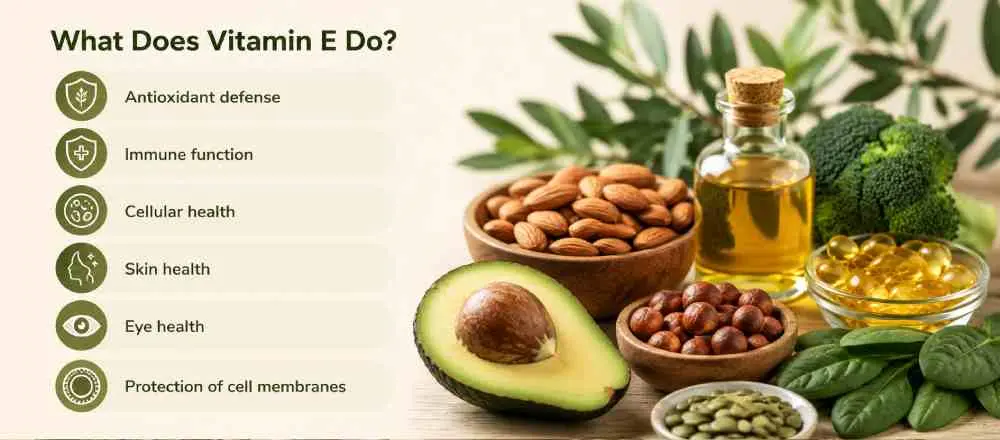
Vitamin E contributes to several important functions that help maintain overall health. Its primary roles include supporting:
- Antioxidant defense
- Immune function
- Cellular health
- Skin health
- Eye health
- Protection of cell membranes
Obtaining enough vitamin E through a varied diet helps support these normal physiological functions.
May Provide Antioxidant Protection
One of vitamin E's primary functions is protecting cells from oxidative stress. Free radicals are unstable molecules produced naturally during metabolism and through environmental exposures. Vitamin E helps neutralize these molecules, contributing to the body's natural antioxidant defense system.
Antioxidant-rich foods are commonly included in dietary patterns that support overall wellness and healthy aging.
Supports Normal Immune Function
Vitamin E contributes to the normal functioning of the immune system. Maintaining adequate vitamin E intake through a balanced diet helps support the body's natural defense mechanisms alongside other essential nutrients and healthy lifestyle habits.
Supports Cellular Health
Vitamin E helps maintain the integrity of cell membranes throughout the body. Its antioxidant activity contributes to protecting cells from oxidative damage and supports normal cellular function.
Supports Skin Health
Vitamin E contributes to maintaining healthy skin by helping protect skin cells from oxidative stress. Healthy skin depends on many factors, including balanced nutrition, hydration, sun protection, and overall lifestyle habits. Vitamin E is one nutrient that supports normal skin health as part of a varied diet.
Supports Eye Health
Vitamin E contributes to maintaining normal cellular function throughout the body, including the eyes. A balanced dietary pattern that includes antioxidant-rich foods may help support overall eye health. Eye health also depends on factors such as age, genetics, and regular eye examinations.
Foods Rich in Vitamin E
Vitamin E is naturally present in many foods.
Plant Sources
- Almonds
- Sunflower seeds
- Hazelnuts
- Peanuts
- Sunflower oil
- Wheat germ oil
- Spinach
- Broccoli
- Avocados
- Mangoes
Animal Sources
- Eggs
- Salmon
- Trout
Eating a variety of vitamin E-rich foods may help support adequate daily intake while contributing other essential nutrients.
Vitamin E Deficiency
Vitamin E deficiency is uncommon in healthy individuals because most people obtain sufficient amounts through a balanced diet.
However, deficiency may occur in people with conditions that affect fat absorption or certain inherited disorders.
Possible signs of vitamin E deficiency may include:
- Muscle weakness
- Difficulty with coordination
- Vision changes
- Numbness or tingling
- Reduced immune function
Healthcare professionals can evaluate vitamin E status and recommend appropriate nutritional strategies when needed.
How Much Vitamin E Do You Need?
Vitamin E requirements vary according to age and life stage. For most healthy adults, the recommended daily intake is approximately 15 mg of alpha-tocopherol per day. Individual needs may differ during pregnancy, breastfeeding, or certain medical conditions. Healthcare professionals or registered dietitians can provide personalized nutritional guidance when appropriate.
Can You Get Too Much Vitamin E?
Although vitamin E is essential, excessive intake from supplements may increase the risk of adverse effects and may interact with certain medications. Possible concerns associated with high-dose supplementation include:
- Increased bleeding risk
- Medication interactions
- Gastrointestinal discomfort
For most individuals, obtaining vitamin E from food sources is the preferred approach.
Vitamin E From Foods vs. Supplements
Vitamin E From Foods
- Naturally accompanied by other beneficial nutrients
- Supports a balanced dietary pattern
- Appropriate for meeting daily nutritional needs in most healthy adults
Vitamin E Supplements
- May be recommended in specific situations
- Should be used according to healthcare professional guidance
- High doses may increase the risk of adverse effects
For most people, food remains the preferred source of vitamin E.
Which department should Ivisit?
Individuals seeking nutritional guidance related to vitamin intake, antioxidant-rich diets, or balanced nutrition may consult the Nutrition and Dietetics or Internal Diseases department.