


 Let Us Call You


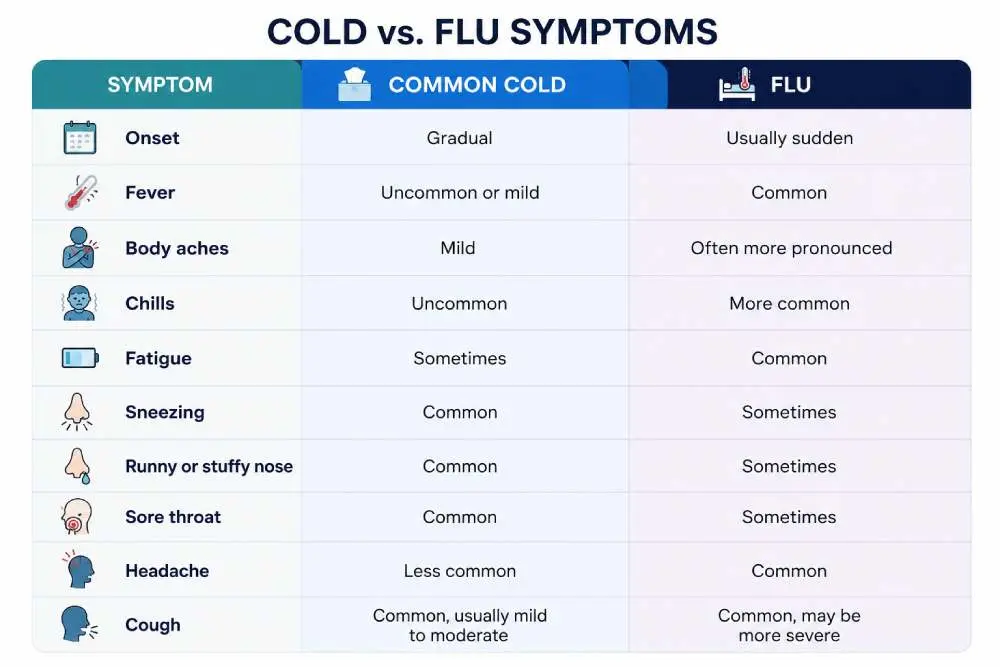
A cold and the flu can cause similar symptoms, but they often differ in how quickly they begin and how severe they are. Colds usually develop gradually and mainly affect the nose and throat, while flu often starts suddenly and may cause fever, body aches, and marked fatigue.
In this article, you'll learn how to recognize the common signs of a cold and flu, how they differ, and when medical evaluation may be needed.
Key Takeaways
- Colds usually develop gradually, while flu often begins suddenly.
- Runny or stuffy nose and sneezing are more common with colds.
- Fever, chills, body aches, and significant fatigue are more common with flu.
- Symptoms alone cannot always confirm whether you have a cold or flu.
- Flu testing may be recommended in some situations, particularly for people at higher risk of complications.
- Severe or worsening symptoms require medical evaluation.
What Is the Difference Between a Cold and the Flu?
Both the common cold and influenza are viral respiratory illnesses, but they are caused by different viruses. Colds are caused by many respiratory viruses, with rhinoviruses among the most common causes, while influenza is caused by influenza viruses.
The biggest difference is often how the illness starts. A cold tends to develop gradually, whereas flu symptoms may appear quite suddenly and feel more intense.
Cold vs. Flu Symptoms
What Are the Symptoms of a Cold?
Cold symptoms usually develop one to three days after exposure to a cold-causing virus. Common symptoms include a runny or stuffy nose, sneezing, sore throat, cough, mild body aches, and sometimes a low-grade fever.
A cold is usually milder than the flu and often improves within about a week, although coughing may last longer.
What Are the Symptoms of the Flu?
Flu symptoms often begin more abruptly than cold symptoms. Common symptoms include fever, chills, headache, muscle or body aches, fatigue, cough, sore throat, and sometimes a runny or stuffy nose.
Some people, particularly children, may also experience vomiting or diarrhea. Flu can be more serious than a common cold and may lead to complications such as pneumonia, especially in people at higher risk.

Is Fever More Common With the Flu?
Yes. Fever is more common with influenza than with a common cold, although not everyone with flu develops a fever. When fever occurs with a cold, it is usually mild.
A high or persistent fever, especially when accompanied by significant weakness, difficulty breathing, or worsening symptoms, may require medical assessment.
Is a Cold or Flu More Severe?
In general, influenza tends to cause more intense symptoms than a common cold. Sudden body aches, chills, headache, fever, and significant fatigue are more characteristic of flu.
However, severity varies from person to person. A common cold can also cause significant discomfort, and people with certain medical conditions may be at greater risk of complications from either infection.
Can You Tell If You Have Flu Without a Test?
Not always. Because cold, flu, COVID-19, and other respiratory infections can share similar symptoms, symptoms alone may not be enough to identify the exact cause.
Flu tests can detect influenza viruses, and healthcare professionals may use testing when confirming the diagnosis would affect treatment or clinical management. Some rapid tests provide results quickly, although their accuracy can vary.
How Are Colds and Flu Treated?
Most uncomplicated colds improve with rest, adequate fluids, and treatment aimed at relieving symptoms. Treatment for flu also depends on symptom severity and individual risk factors. Antiviral medicines may be considered for some people, particularly those at increased risk of complications or those who are very sick. They work best when started early. Antibiotics do not treat the viruses that cause colds or flu.
When Should You See a Doctor?
You should seek medical advice if symptoms are severe, worsening, or not improving as expected. Shortness of breath, chest pain or pressure, persistent dizziness or confusion, severe weakness, dehydration, or symptoms that improve and then become worse may require prompt medical attention.
People at higher risk of flu complications, including older adults, young children, pregnant individuals, and people with certain chronic health conditions, may need earlier medical assessment.
How Can You Reduce the Risk of Colds and Flu?
Good respiratory hygiene can help reduce the spread of viral infections. Regular handwashing, avoiding close contact with people who are sick, covering coughs and sneezes, and staying home when unwell can help protect yourself and others.
Seasonal influenza vaccination is also an important way to reduce the risk of flu and its complications. Vaccination recommendations may vary according to age, health status, and local guidance.
Clinical Insight
A cold and the flu can look similar, but flu generally begins more suddenly and is more likely to cause fever, pronounced body aches, chills, and significant fatigue. Because several respiratory infections share similar symptoms, diagnosis cannot always be made by symptoms alone. People with severe symptoms or a higher risk of complications should seek medical evaluation promptly.
Which Department Should I Visit?
For persistent or concerning respiratory symptoms, you may consult Internal Medicine or Pulmonology. Children with significant symptoms may be evaluated by Pediatrics. Depending on the clinical situation, additional testing may be recommended.
References
- Centers for Disease Control and Prevention (CDC) — https://www.cdc.gov/
- Mayo Clinic — https://www.mayoclinic.org/
- World Health Organization (WHO) — https://www.who.int/
- Health.com — https://www.health.com/